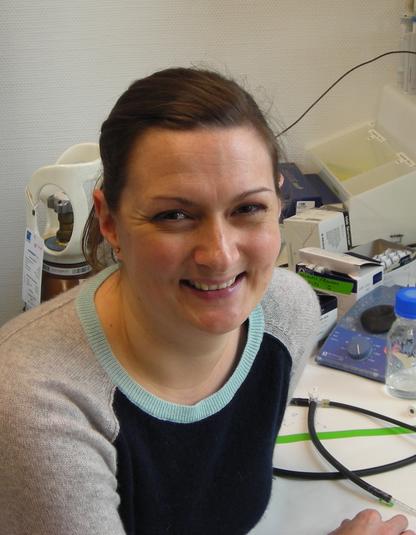
Laura Bristow has a passion for low oxygen systems
Laura Bristow’s research aims to contribute to the improved understanding of the biogeochemistry and microbial ecology of low oxygen regions. She will never cease to be amazed by the versatility of microbes and their ability to always find a way and a niche to flourish in.
What is your research about?
"My research aims to contribute to the improved understanding of the biogeochemistry and microbial ecology of low oxygen regions, which is highly pertinent as low oxygen regions of the ocean have expanded in size and number during the past decades and models predict further expansion in the future as a result of global change. My toolbox to carry out this work includes stable isotope analyses, experimental (in situ) incubations, and biomolecular techniques."
"As nitrogen is a limiting nutrient for primary production in large parts of the ocean, understanding the factors that regulate its availability is critical for the analysis and prediction of the biogeochemical function of the ocean and hence makes up the corner stone of my research in low oxygen regions."
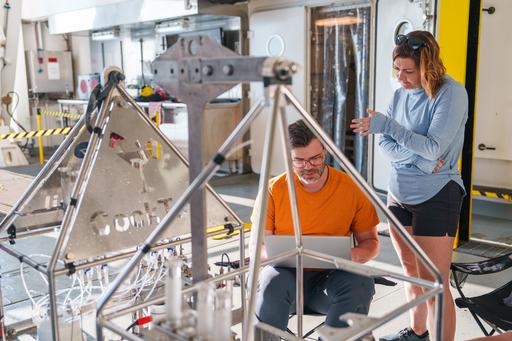
"Central questions of my work right now focus on recycling versus loss of nitrogen, production / consumption of the potent greenhouse gas nitrous oxide and taking our low oxygen rate measurements in situ. The cycling of nitrogen is also intrinsically linked to the cycling of carbon and sulfur, so they also have a key role to play in my research. I will never cease to be amazed by the versatility of microbes and their ability to always find a way, and a niche to flourish in."
What did you do before?
"A long time ago I left the UK after finishing my PhD at the University of East Anglia and was a postdoctoral researcher at the University of Massachusetts Dartmouth, USA and then at the University of Southern Denmark (SDU), Odense, Denmark. After a couple of years as a research scientist at the MPI for Marine Microbiology in Bremen, Germany, I made my return to Denmark and SDU as assistant then associate Professor."
"Many things though have remained consistent through all of this, including my passion to work on low oxygen systems, integrating biogeochemistry and microbial ecology, my love of field work and if I had a choice, I would spend my whole day in the lab!"
What do you do when you are not working?
"I love to be in the kitchen, cooking and baking (guess that’s the lab scientist in me!), spending time with my family and friends, and I never miss an opportunity to be outside particularly at the coast."
Interview: Annika Wall
ERC Synergy Grant
Laura Bristow received 2024 - 2030 the ERC Synergy Grant for the project RECLESS – Recycling versus loss in the marine nitrogen cycle: controls, feedbacks, and the impact of expanding low oxygen regions
RECLESS aims to create the first comprehensive global model of microbial ecosystems in oxygen-depleted marine environments. This model will help scientists predict how ongoing deoxygenation impacts nitrogen cycling, nitrogen loss, greenhouse gas emissions, and the overall carbon cycle.
he European Research Council (ERC). ERC was set up by the European Union in 2007, and is the premier European funding organisation for excellent frontier research. The point of the ERC Synergy Grant is to bring together researchers with different expertise to work on very complex problems that no person or institute can address on its own.
Total amount: €10 million for 6 years duration. A total of approximately €3 million will be coming to the Department of Marine Sciences.