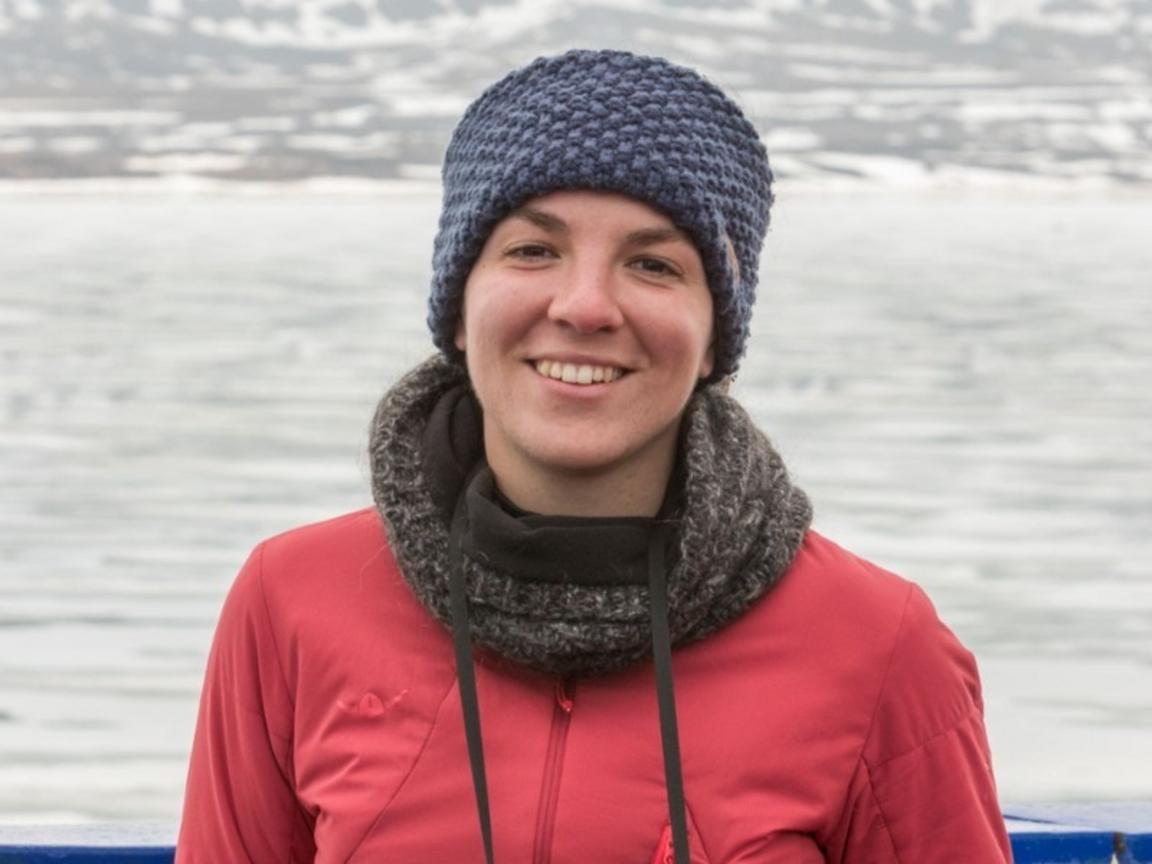
My name is Ida Haven. I’m from the Netherlands, and I am doing a PhD at the University of Gothenburg in the Department of Earth Sciences. My PhD, Attributing Summer Arctic Polynyas (ASAP), is about using satellite measurements to investigate holes in the sea ice, called polynyas, in the summer in the Arctic. Besides being part of SEAL, I am also part of the Swedish Space Research School doctoral training school (SRSS-DTS) and my PhD is also funded through the SRSS-DTS by the Swedish National Space Agency / Rymdstyrelsen.
What do you study?
Polynyas have a big effect on the Arctic, as the sea ice acts as a buffer between the ”warm” sea and the ”cold” atmosphere, and in these polynyas the sea gets directly exposed to the atmosphere, affecting both the ocean and atmosphere. The time, size, location and duration of these polynyas can vary a lot. In my research, I will investigate what conditions cause these polynyas to appear and then try to be able to predict when and where they will appear.
Why is this research important?
What can your research help us understand, and why is this important from a scientific and societal perspective?
With this research, I’m hoping to gain a better understanding of the conditions causing polynyas to form and predict how this might change with climate change and therefore also the changes occurring in the Arctic. Furthermore, the prediction of polynyas offers possibilities for transport and safety logistics in the Arctic.
What methods do you use?
I will use satellite measurements to locate where summer polynyas have been in the past. I will combine this with climate data on the conditions in the Arctic and at the location of these polynyas. Furthermore, I will use data collected during the MOSAIC research cruise in 2020/2021 and do some modelling to better understand the processes occurring in and around these polynyas.
What motivates you about working with the polar regions?
I am fascinated by the physics of the climate system and really enjoy understanding why nature and the things around us work the way they work. The poles both play such an important role in this system that they are key to understanding the rest of the climate system. At the same time, they are also the areas that are changing the fastest due to climate change. Having spent nearly a year living in Svalbard, I got the chance to experience this firsthand, motivating me to go into polar research and try to better understand and protect this place.
Why SEAL?
I’m super excited to be collaborating with these like-minded people throughout the PhD process and helping each other’s research. I’m also eager to go into the field with the graduate school and get to experience the processes we’re investigating firsthand. Lastly, I really appreciate the multidisciplinary character and also getting a broader, socio-economic perspective on the polar regions, including awareness and respect for Indigenous Peoples.