
Johanna Wijk: Acute kidney injury is common after heart and lung surgery
Research in Johanna Wijk's doctoral thesis identifies risk factors for acute kidney injury before, during, and shortly after lung transplantation. Her findings also highlight the importance of protecting kidney function during cardiac surgery involving cardiopulmonary bypass and optimizing blood flow through the cardiopulmonary bypass machine.

JOHANNA WIJK
Dissertation defense: 20 November 2026 (click for details)
Doctoral thesis: Acute kidney injury after cardiac surgery and lung transplantation
Research area: Anesthesiology and Intensive Care
Sahlgrenska Academy, The Institute of Clinical Sciences
Acute kidney injury is a common and serious complication following major heart and lung surgery. It can lead to longer hospital stays, an increased risk of complications, and sometimes permanent loss of kidney function. Although the risk of kidney injury is well known, the underlying mechanisms are still not fully understood.
The overall aims of the thesis were therefore to investigate whether kidney injury could be prevented or reduced by optimizing blood flow during cardiopulmonary bypass, and to identify risk factors for acute kidney injury associated with lung transplantation.
“I wanted to determine how frequently acute kidney injury occurs after lung transplantation and identify risk factors for its development in a nationwide patient population. I also wanted to investigate how different types of mechanical circulatory support affect patients' postoperative outcomes,” says Johanna Wijk, senior consultant in cardiothoracic anesthesia and intensive care at Sahlgrenska University Hospital and a doctoral student at the Institute of Clinical Sciences.
The importance of protecting kidney function during surgery
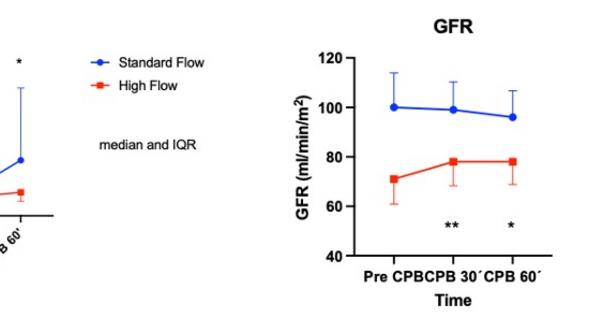
The first study evaluated whether increasing blood flow during cardiopulmonary bypass could improve oxygen delivery to the kidneys and reduce the risk of acute kidney injury during cardiac surgery.
“The results suggest that higher blood flow during cardiopulmonary bypass may benefit the kidneys. We observed lower levels of kidney injury markers in the urine and an increased glomerular filtration rate, indicating improved kidney function. However, we did not find a reduction in the incidence of clinically diagnosed acute kidney injury.”
The second study investigated the incidence of acute kidney injury among patients undergoing lung transplantation in Sweden between 2011 and 2020.
“We identified risk factors present before, during, and shortly after surgery. We also explored whether the use of mechanical circulatory support, either cardiopulmonary bypass or ECMO (extracorporeal membrane oxygenation), during surgery was associated with an increased risk of acute kidney injury and other postoperative complications.”
The researchers found that 42 percent of patients developed acute kidney injury, with a higher risk among those who required mechanical circulatory support during surgery.
“Larger studies are needed to confirm our findings regarding increased blood flow during cardiopulmonary bypass. Further research involving lung transplant recipients is also needed to better understand how acute kidney injury can be prevented.”
How would you describe your experience as a doctoral student
“It has been both enjoyable and rewarding to conduct clinical research that may directly benefit patients undergoing cardiac surgery and lung transplantation. It feels meaningful to contribute another piece of the puzzle, with the ultimate goal of improving patient care and treatment.”
Text: Susanne Lj Westergren