
Future dietitians practice with virtual patients
Dietetics students at the University of Gothenburg can now practice patient consultations with virtual patients. Using chatbots and animated avatars, they can develop their skills in asking questions, assessing patients, and recommending treatments in an environment where they can make mistakes without fear.
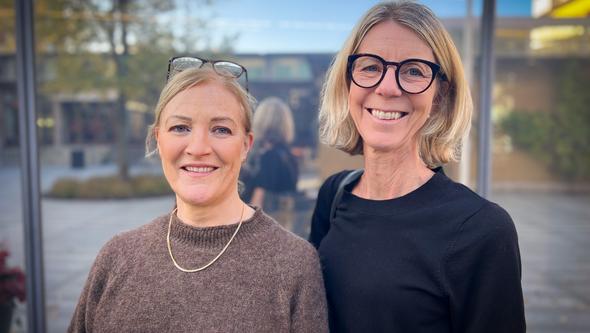
“Students repeatedly tell us in course evaluations that they want more opportunities to meet patients. That got us thinking: Could we create fictional patients for them to practice with?” says Jenny van Odijk, Senior Lecturer in the Dietetics Program.
With funding for educational development and in collaboration with the Department of Applied Information Technology, the team first developed a text-based chatbot. Students can ask the virtual patients questions and receive responses based on predefined medical conditions and personal circumstances.
A safe space to practice and make mistakes
Alongside several text-based patient scenarios, the program now has two virtual patients who speak and have animated faces. They were developed specifically for the Dietetics Program in collaboration with SoftSim AB, a startup founded by researchers at Malmö University.
The virtual patients allow students to practice conducting consultations, asking relevant questions, and recommending interventions. They might, for example, encounter an older adult experiencing malnutrition or a parent whose child is not growing as expected.
“Meeting a patient is different from practicing with a classmate. Here, students have to take the lead and keep the conversation going. And if they make a mistake, that's okay. They can try again,” says Jenny.
Agneta Lind, Lecturer and a faculty member involved in the program's clinical placements, sees considerable potential for helping students prepare for their practical training.
“Students need to practice gathering information and working with patients to turn it into concrete recommendations. These skills develop through practice, and virtual patients could be a valuable complement to the patient encounters we can offer during their education,” says Agneta.
Patients who don't always cooperate
Making the conversations realistic is an important part of the development process. The virtual patients should not always provide complete answers or be overly cooperative. Students need to learn to ask follow-up questions, handle uncertainty, and adapt their approach to each patient's needs.
The animated avatars are still at an early stage of development. Work is underway to improve their reliability and make them accessible on different types of student computers. The text-based chatbots remain available as a complementary learning tool.
Jenny and Agneta are continuing to develop additional patient scenarios and improve how the virtual patients respond. Student feedback will be important in guiding this work.
Looking ahead, they also see opportunities to use virtual patient consultations as part of student assessments, potentially alongside assignments in which students write patient records.
“We're constantly learning more about how to design the virtual patients so that the conversations are as useful as possible. It's a tool we can continue to develop in response to the program's needs,” says Jenny.
Per Holby is one of the students who has tried both the text-based chatbot and the animated avatar. He shares his experience of using these tools as part of his learning:
“The conversation with the animated avatar felt much more realistic than the one with the text-based chatbot. The answers were often short, so I had to practice asking open-ended questions and probing further. The patient didn't understand all the medical terms either, which meant I had to use more everyday language. It was also good to practice speaking rather than just typing. One drawback was that the chatbot didn't always seem to remember what we'd discussed earlier. Sometimes it stopped responding altogether, and I had to restart the program.”