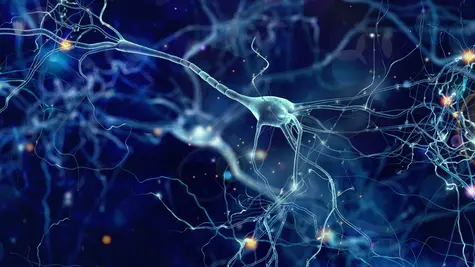
The fields of cognitive neuroscience and neuropsychology study the relationship between brain and behavior.
Overview
Status
Active
Research type
Research group
Research areas
Health and medicine
Society and economy
Psychology
Neuroscience
Responsible organization
Department of Psychology
Our research area
A common theme in the research group Integrative Cognitive Neuroscience Lab (ICON Lab) is to answer questions about how the brain produces (and is shaped by) thoughts, emotions, and behavior, and how the brain relates tomental health. This theme is by nature interdisciplinary and research in this field often requires collaboration between psychologist and medical doctors to successfully apply methods such as brain imaging and cognitive tests in studies of both healthy volunteers and patients. Our research has a focus on the plasticity of the brain during learning, aging of the brain in relation to memory performance, and how cognition and emotion are affected in neurological and psychiatric conditions.
SYBILLA project aims to shed light on the mechanisms underlying context-based predictive processing in the cerebellum, using ultra-high resolution structural and functional magnetic resonance imaging (MRI) at 7 Tesla.
In this study, we aim to measure the concentration of synapses in the brain, changes in the concentration of synapses during learning (plasticity), and blood markers for Alzheimer's disease in older individuals with mild neurocognitive impairment. Measurements of synaptic concentration have recently become possible through the development of a new tracer for positron emission tomography (PET). Our goal is to unravel several mysteries surrounding the physiological processes behind cognitive impairment and Alzheimer's disease, and for the first time, investigate whether learning-related synaptic restructuring can be measured in humans.
Researchers
Martin Lövdén Toms Voits Gaia Olivo
Collaborators
Michael Schöll Silke Kern
Ulman Lindenberger, Center for Lifespan Psychology, Max Planck Institute for Human Development, Berlin, Germany.
Funders
Swedish Research Council (Vetenskapsrådet)
Max Planck Society
The brain is capable of reorganizing its structure and circuits in response to new demands, changes in the environment, and even within a few minutes of learning a new skill. In this study, we aim to measure how brain structure and function change during skill learning, how fast it can be, how long these changes can be retained, and what are the individual predictors of brain plasticity. We will employ ultra-high resolution MRI imaging of the human brain, and MRI and histology of the mouse brain, to gain insight into the macro- and microscopic changes leading to brain plasticity and skill acquisition. Breaking the code to understand how brain plasticity works can help us address the vulnerability of our brains to aging, damage, and neurodegeneration.
Researchers Daniel Marcellino Gaia Olivo
PhD students Sean Arthur Cully
Collaborators Martin Lövdén
Funders Knut och Alice Wallenberg Foundation
Members
Full professors
Martin Lövdén, Professor Learning, Plasticity, Development, Aging
Associate professors
Angelica Hagsand, Associate Professor Cognitive functions, memory, decision-making, alcohol
Stefan Winblad, Associate Professor Executive functions, emotions, social cognition, neurological and psychiatric disorder
Lecturers/researchers
Marie Eckerström, Senior lecturer Clinical neuropsychology, Cognitive dysfunction in relation to dementia disorders, work-related stress disorder, and viral infections in the central nervous system
Gustaf Glavå, Postdoctoral researcher Behavioral genetics, clinical neuroscience
Gaia Olivo, Assistant professor Learning, Plasticity, Development, Brain Imaging, MRI
Freja Erikson, Research assistant Maria Gröndal, PhD Teodor Juel Eckerström, Research assistant Luisa Klahn, Researcher Gabriel Lennartsson, Research assistant Viktor Magnusson, Research assistant Henrietta Plate, Research assistant