
The making of a polar researcher aboard R/V Skagerak
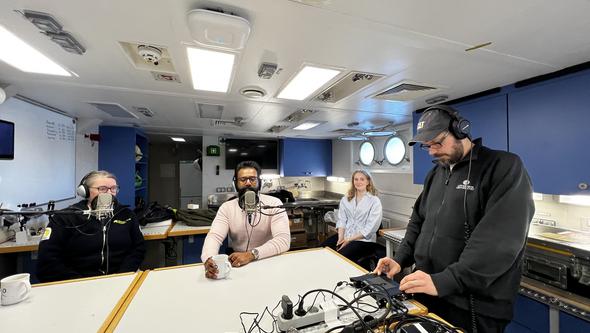
Interest in the polar regions is growing, and more research is needed to understand how they are changing. But how can the next generation of polar researchers gain the experience they need? In the latest episode of the podcast Expedition Skagerak, Anna Wåhlin and Tarun Sathiyan discuss the journey from the classroom to fieldwork.
“It was really foggy, extremely hard to see anything,” recalls Tarun Sathiyan, a PhD student at Chalmers University of Technology.
Researchers and crew were searching for an orange dot in the waters off Greenland. For Tarun, recovering scientific equipment became a practical lesson in teamwork and adapting when things did not go as planned.
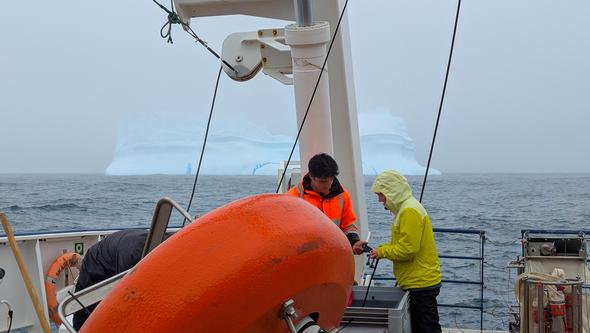
Tarun Sathiyan was one of five early-career researchers selected to join the expedition aboard R/V Skagerak in summer 2025. The call attracted more than 100 applications.
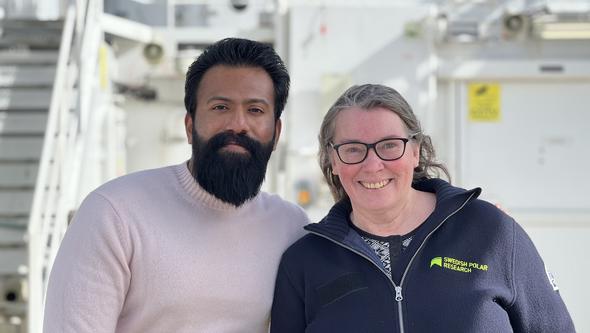
Learning beyond the classroom
Anna Wåhlin, Professor of Physical Oceanography at the University of Gothenburg, emphasises the importance of this hands-on experience in training polar researchers.
“That’s something you can’t learn in the classroom. You need to be out in the real world and learn it,” she says.
For her, access to research vessels is about more than reaching remote places and collecting data. On board, early-career researchers learn their craft, make decisions when plans change and identify new research questions together with colleagues from other disciplines.
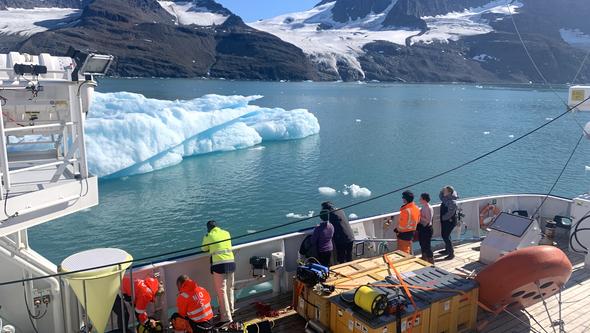
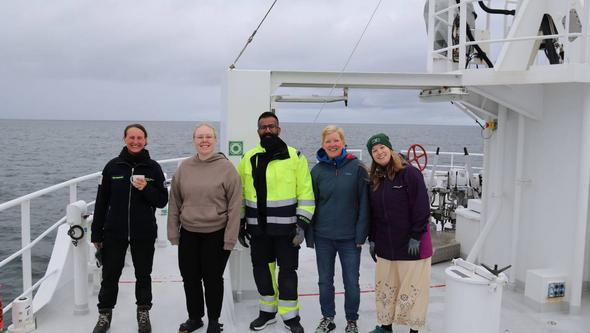
New pathways into polar research
Bringing different perspectives together is also central to SEAL, Sweden’s national interdisciplinary research school in polar science, in which Anna Wåhlin is involved. The school gives PhD students opportunities to broaden their knowledge and build networks across disciplines. In the conversation, she also discusses plans for a field course in Greenland in 2028, including work aboard Skagerak.
But as robotics and AI open up new possibilities, what will future polar researchers still need to learn first-hand at sea?
Listen to the episode
Listen to episode 3 of Expedition Skagerak: All Eyes on the Arctic – The Making of a Polar Researcher.
Recorded in English aboard R/V Skagerak. Produced in collaboration with Medieteknik and funded by the Gustaf Adolf Bratt Lecture Fund.

