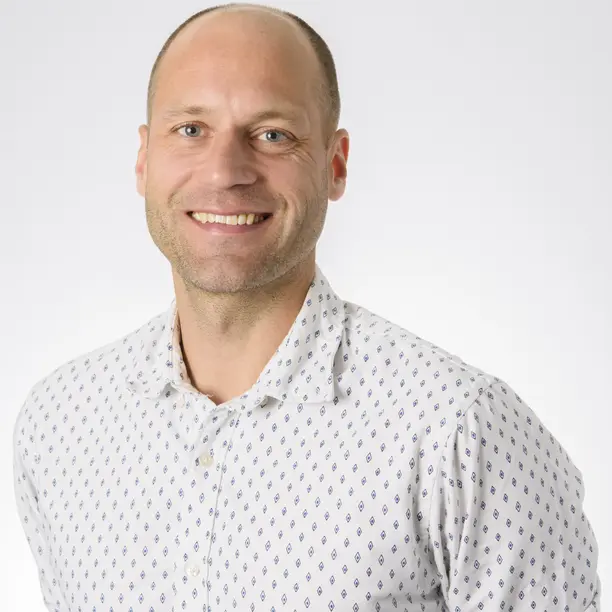
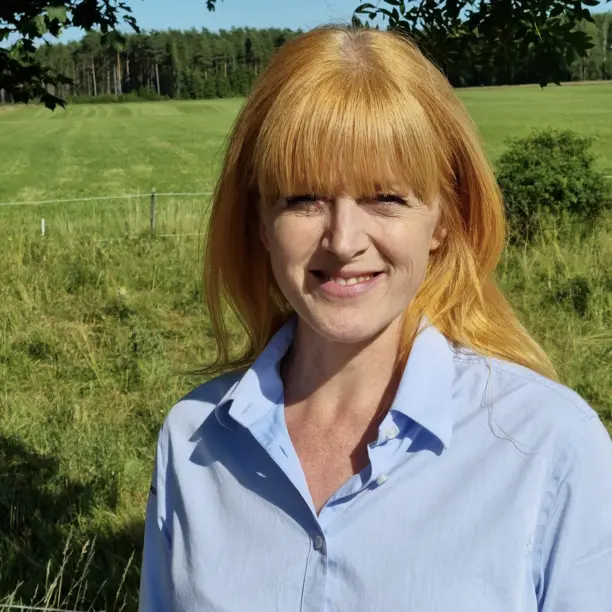
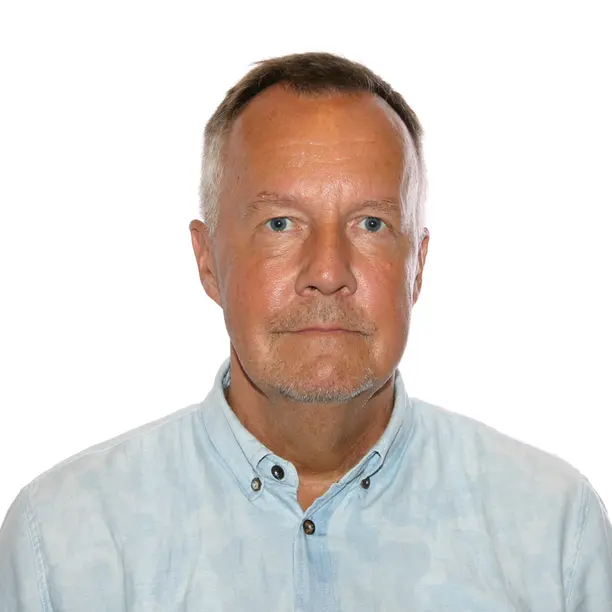
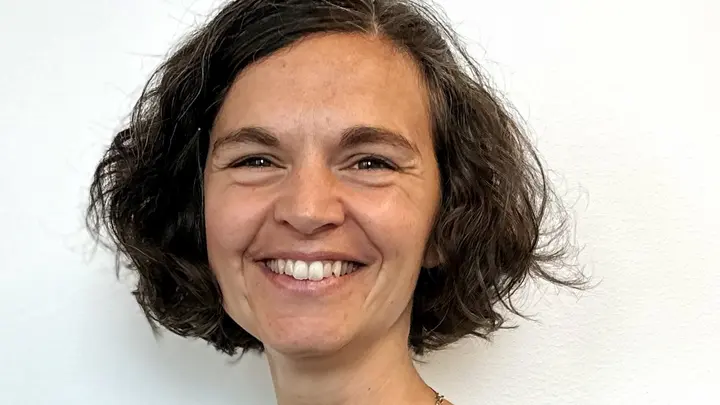
The steering board consists of representatives from each of our 20 partner organisations. The steering board works closely with the centre's director and project coordinator. Together, the steering board and leadership develop and implement the GGBC's vision, ensuring maximum impact in accelerating biodiversity research and knowledge.
GGBC Steering board
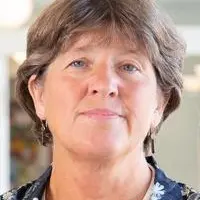
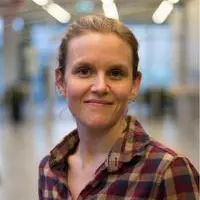
Marie Stenseke (Chair of the GGBC Steering Board, GGBC Management Team)
Department of Economy & Society, University of Gothenburg Marie Stenseke is a professor in human geography at the Department of Economy and Society at the University of Gothenburg. Her research concerns biodiversity, nature conservation and landscape management from a social science perspective.
We’re happy to have you as the chair of the GGBC steering group, Marie. We see this as an opportunity to better incorporate aspects of biodiversity work beyond the natural sciences within the GGBC. What is your vision regarding this?
Thanks, I am happy to intensify my engagement in GGBC! GGBC provides a unique interface between science and partners working with knowledge production and knowledge transfer by other means. In my vision, GGBC, with a broader range of expertise and also increased interaction between its partners and members, will significantly contribute to enhancing biodiversity in West Sweden and elsewhere in the world. Following the GGBC's mission statement Biodiversity awareness through research and outreach, there is great potential to bring in more partners and members with solid scientific knowledge on human perceptions, norms and behaviours and the logics of business as well as, for example, welfare aspects associated with biological diversity, legal, economic and communicative instruments and spatial planning.
If you could dream wildly, what would you like to see the GGBC achieve in the next three years ?
Not sure about my capability to be wild, but I would like to see the following:
Fruitful win-win interactions between researchers and non-academic partners in GGBC, leading to joint activities, including increased research that provides important knowledge and improved outreach
The establishment of new groups/platforms to enhance knowledge generation, as well as interdisciplinary and transdisciplinary interactions. I could think of the following: one on Business and biodiversity – building on the network that has already started at the School of Business, Economics and Law; one on Social sciences and Humanities to strengthen those perspectives on biodiversity; and one on Interdisciplinarity, to stimulate interactions and overcoming the disciplinary hurdles for addressing the complex problems.
Increased and improved strategic interactions between GGBCs outreach-focused partner organisations
Your role as Co-chair of the Multidisciplinary Expert Panel of Intergovernmental Platform on Biodiversity & Ecosystem Services (IPBES) has recently ended. What are some of the most important lessons you take with you from this experience?
The most important lesson I bring with me from IPBES is the global perspective in a broad sense. It has meant profound insights into the immensely different social and ecological conditions and contexts all over the world and a humbleness (I would like to think) that keeps me from taking for granted how and why people and businesses in different places and regions interact with the rest of nature. It has, however, also given me insights into how the world is interlinked. The global challenges are indeed integrated and indivisible as stated in Agenda 2030, which is why the loss of biodiversity must not be seen or treated as a stand-alone problem. The IPBES global report shows that the loss of biodiversity and human impacts on ecosystem functions has made the world more unequal over the last 50 years. The great expansion since 1970 in the production of food, feed, fibre and bioenergy, has meant increasing benefits to those that are already economically privileged, while the cost has been largely paid by poor and marginalised people in terms of degraded living environments, degraded ecosystems and the loss of species richness.
Secondly, I have learnt the need to acknowledge plural epistemologies and also some skills on how to work towards that. I would like to think that those skills will prove useful in my engagement with GGBC. It is a recognition that we need to seek common ground to address the many ‘wicked problems’ related to biodiversity loss. This implies an openness to different knowledge approaches, an increased awareness about how disciplines and knowledge holders far from ones own work and contribute to addressing the loss of biodiversity and how to change the negative trends. It has been quite visible in IPBES that there is a special need to better understand and incorporate contributions from social sciences and humanities. There is much of ‘social science light’, done by natural science experts with good intentions that realise the need for including human dimensions, but not recognising all that has been done in social sciences and humanities already, nor how to build on previous research and established knowledge in those scientific strands.
Marie Stenseke, Professor in Human Geography at the Department of Economy and Society. Can you tell us about some biodiversity research that is going on in your department?
The department hosts three units: Economic history, Human geography and innovation and entrepreneurship. In Economic history research related to biodiversity is largely carried out by Per Hallén. Per's research focuses on the green areas of Gothenburg, their history and use. He is also studying the role of fish and fisheries in human society and how that has developed over time. In Human geography, several of us are engaged with biodiversity, and the topic is dealt with in the research group Landscape and Planning. At present, we are working in projects and programs concerned with:
Biodiversity and Transformative Change for plural and nature positive societies, with a case study on Swedish private forest owners (Horizon Europe, Katarina Haugen, Oscar Jacobsson, Marie Stenseke, Oskar Abrahamsson);
Food preparedness, farming systems and resilience to crises, with case studies of farms in Kalmar and Skåne (Swedish Research Council, Oscar Jacobsson) Policy lab on climate-smart forestry, sustainable land use and private forest owners’ role in climate transition and biodiversity (Formas, Katarina Haugen, Oscar Jacobsson)
Policy lab on sustainable land use and climate mitigation (Formas, Marie Stenseke);
Biodiversity and finance (Mistra, Marie Stenseke)
Over the years, we have also had several projects on outdoor recreation, semi-natural pastures, landscape management and marine spatial planning). At the same time we work with mainly qualitative methods, of our research is to a large extent interdisciplinary and the projects carried out together with scholars in natural sciences.
Your department was the first one from outside of the Faculty of Science at UGOT to join the GGBC. You are a huge proponent of the benefits of working in an interdisciplinary way. What do you see as the biggest potential benefit of bringing together the natural sciences with the humanities and social sciences?
Since the contemporary global challenges are complex and interrelated, interdisciplinary cooperations is fundamental for academia in order to provide knowledge about sustainable ways forward. We need to pair knowledge on the character and magnitude of environmental problems, status and trends with knowledge of socioeconomic drivers, governance, trade, business, how various groups are affected, justice, behaviour, values, norms etc. to come up with robust solutions. This does not mean that all research have to be interdisciplinary. It is crucially important to recognise and make transparent the difficulties with interdisciplinary work that has to be handled. A couple of key issues are lack of understanding of the differences between various scientific strands and a lack of insights in what research is ongoing in other faculties. Bringing scholars from different disciplines into conversation, can cure these deficits and build stronger sustainability research together more thoroughly based on previous research.
You have been the Co-chair, Multidisciplinary Expert Panel of Intergovernmental Platform on Biodiversity & Ecosystem Services (IPBES). How has your time within IPBES influenced your own approach to biodiversity research?
My time in IPBES has certainly increased my interest in how to improve interdisciplinary work in biodiversity research. The issues and challenges I have encountered in this global arena are very similar to the ones I had previously experienced in the narrower Swedish context. I have developed my insights and strengthened my arguments when it comes to why, when and how to include competencies from social science and humanities in biodiversity research, naturally recognising that scholars from social science and humanities, like myself, also fit the label ‘biodiversity researchers’.
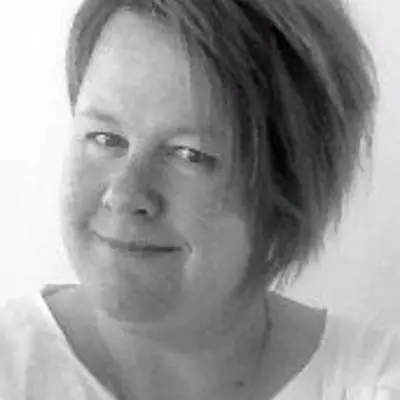
Åsa Arrhenius (GGBC Management Team).
Department of Biological & Environmental Sciences, University of Gothenburg
Åsa is the head of the Department of Biological and Environmental Sciences at the University of Gothenburg. Her research background is in environmental science with a focus on ecotoxicology and the effects of mixtures or so-called chemical cocktails.
Åsa, could you tell us a bit about your background and your role as the head of the Department of Biology and Environmental Sciences, GGBC’s host department?
My background is in biology and environmental sciences. My research focus has been on ecotoxicology, i.e. how toxic chemicals affect organisms. My research has mainly been on microbial communities and how biodiversity can be affected by e.g. antifouling agents, pharmaceuticals and mixtures thereof. After finishing my PhD and some postdoc time, I have now worked as principal research engineer for 10 years. The position has included many different tasks around research, teaching and outreach – the three important responsibilities we have at the University. For the last six years, I have served as coordinator of the FRAM centre, the Centre for Future Chemical Risk Assessment and Management Strategies at the University of Gothenburg.
I started as head of BioEnv on April 1st 2022 and it is indeed a challenging and rewarding task. I learn new things every day and try to live up to expectations that come with the assignment. Being part of GGBCs steering group is indeed a interesting part of the new job.
You have been a part of another important centre hosted at BioEnv for many year: FRAM. It is no secret that chemicals in the environment affect biodiversity. Can you tell us about some of the initiatives that researchers at BioEnv and FRAM are working on to better understand how chemicals affect our planet?
Several ongoing projects focus on different types of chemicals (pharmaceuticals, pesticides, biocides, industrial chemicals and more) and particles (both smaller ones, such as nanoparticles, and larger ones, such as microplastics). It sheds light on all biological levels; genes, cell, individuals, populations, communities and ecosystems, and different environments, mainly aquatic. It focuses not only on potential effects of exposure to a single compound and/or mixtures but includes also monitoring studies in the field to follow trends of effects due to pollutants in the environment. How organisms could be used for bioremediation is also a pressing research question. Another important part of the ongoing research at BioEnv and FRAM is within chemical risk assessment were we evaluate chemical risks (in particular associated with chemical mixtures) to enable a safe and sustainable use of chemicals.
At FRAM we work in different parts of the world to study the effects in different types of ecosystems but also different chemical management systems. Chemicals do not see borders and hence there is a need for global action. FRAM has been active in the efforts to establish an International Panel on Chemical Pollution (IPCP) similar to IPCC. The aim is to increase global awareness of the chemical cocktail humans and the environment are exposed to and to fill critical gaps in the communication between science, policy and the public.
How does the department benefit from being a host institution to centres such as FRAM and GGBC? What role do you see that the centres play in connecting the department with the rest of the university and society at large?
As a department, we benefit from the funding brought in by the centres, and with more funding more important research can be done. Importantly, the activities around the centres are not only research but a lot more. All the regular seminars, workshops, courses, and different events that the centres organise are something both departmental colleagues and our students benefit a lot from. It makes the department an interesting workplace for us and others.
The centres at the University play an important role in connecting faculties, departments, other organisations and society. They bring together different types of expertise and contribute to a deeper understanding of ourselves and our planet. They accelerate visions and solutions for sustainable development. I cannot see that any part alone can bring all the answers, so the centres provide the necessary links or bridges to other research environments and society at large.
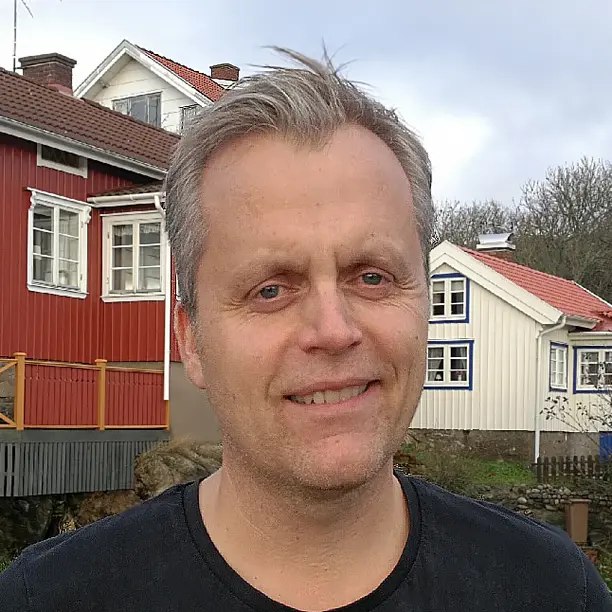
Stefan Örgård (GGBC Management Team)
Gothenburg Natural History Museum
Stefan is the Museum Director at the Gothenburg Natural History Museum. He has an education in marine ecology and has a long experience in communication science.
Erik Johansson
Borås Djurpark
Erik serves as the Zoological Director at Borås Djurpark, where his responsibilities encompass both human and non-human animals. He holds a Master's degree in Cognitive Sciences from Lund University and a Bachelor's degree in Biology (ethology) from the Swedish University of Agricultural Sciences (SLU). His primary interests lie in animal welfare and behavior; however, in recent years, he has concentrated primarily on conservation education and communication.
Marlin Rosengren
Centre for Sea and Society, University of Gothenburg
Malin is deputy director and coordinator of the Centre for Sea and Society hosted at the Department of Marine Sciences at the University of Gothenburg. Her research focuses on marine food security and is a science communicator.
Ben Clarke
Department of Applied Information Technology, University of Gothenburg
Ben is a Senior Lecturer in Communication Studies at the Department of Applied Information Technology. One main strand of his research explores how environmental issues like climate change are communicated by different stakeholds relevant to such questions (e.g. politicians and activists). As a part of this, he is interested in if and how different ways of communicating about environmental issues can affect relevant behaviour of various publics. He also currently researches critical questions of persuasion in digital communication spaces - for example, the polarisation of online publics and incivility online.
Viktor Elliot
Department of Business Administration, University of Gothenburg
Viktor is senior lecturer in the Department of Business Administration and has a background in Business Administration with a special focus on Bank Management, Regulation, Financial Institutions and Markets, Supply Chain Finance, Management Accounting and Performance Management. Viktor represents the Center for Finance in the competence center for finance at Business Region Göteborg. In recent years, he has been working in the field of sustainable finance and is involved in the Mistra project BIOPATH.
Hi Viktor! You have a PhD degree in Business Administration and a research background in banking and finance. For the past few years, you have been working in the field of sustainable finance and are also part of the Mistra project BIOPATH.
How do you think the partnership with GGBC will help the Department of Business Administration strengthen its work?
It is very difficult to do relevant research in the cross-section between business and biodiversity without a sound rooting in the physical ecology that we are studying. Researchers in economics and business administration generally have a rather limited understanding of the processes and physical characteristics of nature and we are therefore highly dependent on getting that input from others. We believe that GGBC is an excellent forum for us to meet and interact with biologists and ecologists that can soundproof our ideas and help us develop relevant proposals for research and practice with the goal to prevent further depilation on biodiversity. We also view GGBC as an excellent partner for co-organization of events and other activities in this area.
What new perspectives do you expect you and your department will bring to the GGBC?
We will bring the business-perspective. Many businesses are increasingly understanding that they are highly dependent and that they do in fact have an impact on nature. However, few business-leaders understand how to translate this awareness into something actionable and those that do are limited in their understanding of how to utilize the insights from natural sciences in a business context. So hopefully we can work together in making biodiversity a factor in business decisions. If we can successfully mobilize businesses we can create further momentum towards reducing biodiversity loss.
Robert Björk
Department of Earth Sciences, University of Gothenburg
Robert is a senior lecturer at the Department of Earth Sciences at the University of Gothenburg. His work focuses on plant community dynamics to greenhouse gas fluxes in terrestrial systems, focusing mainly on the tundra environment.
Matthias Obst
Department of Marine Sciences, University of Gothenburg
Matthias is an Associate professor in Marine biology at the University of Gothenburg in Sweden. He has 16 years of experience as an academic researcher, infrastructure developer, and project manager in the marine environmental sector. Matthias is especially interested in building observation systems for biological diversity in the ocean.
Sverker Molander
Environmental Systems Analysis, Chalmers University of Technology
Sverker is a professor at the Chamers University of Technologywho develops and applies different systems approaches in his research on human induced environmental change and its mitigation. He is particularly involved in studies related to risks from chemicals, material flows and research on energy systems based on renewable sources. The systems methods applied are assessments of ecological/environmental risks and substance/material flows often with a product chain/life-cycle perspective. The identification of indicators and indicator systems covering environment and sustainability is a recurrent theme in his research.
Jenny Klingberg
Gothenburg Botanical Garden
Jenny is a researcher at Gothenburg Botanical Garden. Her research interests focus on the ecosystem services of urban trees and other greenery in urban environments. This includes how urban greenery affects the urban environment, for example, through removing air pollutants, but also more generally by contributing to an improved local climate and a more attractive environment.
Christophe Risenius
Havets Hus
Christophe is the CEO of Havetshus. He has a keen interest in sustainable development and issues relating to the marine environment. He is driven by a desire to develop initiatives that help to protect and improve the marine environment, both in his professional and private life.
Claes Gustafsson
Herbarium GB
Claes is a Museiintendent and the Head of the Herbarium at the University of Gothenburg. He has a Ph.D. in Botanical Taxonomy and Systematics and has worked with botany at the University of Gothenburg, the Gothenburg Botanical Garden, and the Gothenburg Botanical Society.
Eskil Mattson
IVL - Swedish Environmental Research Institute
Eskil is a researcher and geographer at IVL with extensive experience in nature-based solutions to climate change with a focus on sustainable forest and multi-functional land use management. He has vast experience in ecosystem services, biodiversity, forest carbon stock assessments, climate policies and environmental management, both on a technical and policy level.
Björn Källström
Maritime Museum and Aquarium, Gothenburg
Björn is the development leader at the Maritime Museum and Aquarium in Gothenburg. He is also involved in havet.nu, a news outlet focused on science and facts about the sea, and engaged in a lot of public education. Björn is the leader of the research working group in GGBC.
Paula Bäckman
Naturbruksförvaltningen
Paula is an area manager at Naturbruksförvaltningen, Region Västra Götaland where she works towards green industry's sustainable growth and development through the region's nature management schools, test environments in Skara, Svenljunga and Töreboda and through various collaborative projects with academia, research actors and green entrepreneurs.
Mats Höggren
Nordens Ark
Mats is the director/CEO of Nordens Ark, a Swedish non-profit foundation dedicated to the preservation of endangered wildlife. He has a background in biology, with a PhD in genetics from Uppsala University.
Linda Thelin
Slottsskogens Djurpark
Linda works as a zoological curator at Slottsskogen Zoo. She has a background in biology, pedagogics and nature interpretation. Linda also works for other organisations, and the common factor for all assignments is that they aim to increase commitment to biodiversity and sustainability issues.
Terese Schwartz
Universeum
Terese is the Head of Department, Living & Learning Environments at Universeum, Sweden's national science centre and a leading arena for education and public outreach in natural sciences, technology, and sustainable development. She holds a Master's degree in Marine Ecology from the University of Gothenburg and has also studied at Nelson Mandela University in South Africa. Terese is passionate about conservation work and animal welfare.
Mattias Lindholm
Västkuststiftelsen
Mattias is Västkuststiftelsen's new head of nature conservation. He has obtained his PhD working on the ecology of heathland communities.
Welcome to the GGBC steering group Mattias and congratulations on your new role at Västkuststiftelsen. You’re not new to the GGBC though! Could you tell us more about your career path and this new assignment?
It's true that I'm not completely new to this. I have been an active member of GGBC both when I was a doctoral student at GU and in my position as a conservation biologist at the Gothenburg Museum of Natural History. In the past, I have also worked as a nature conservation consultant with a focus on the protection and management of western Swedish nature areas. In my new position as head of nature conservation at Västkuststiftelsen, I will have overall responsibility for the nature conservation work in the nature reserves that we manage.
With all your applied biodiversity work experience here on the West Coast of Sweden, are there any specific new directions you would like to explore with Västkuststiftelsen?
We will work more with large-scale nature conservation measures such as burning of forest for conservation and restoration of wetlands. Fire is a natural element in the forest landscape and there are many species that either benefit or are directly dependent on the forest burning. Here we will experience positive landscape effects for biological diversity, which will be very exciting to follow up.
How does partnership in GGBC help Västkuststiftelsen strengthen its work towards its mission?
Our membership in GGBC enables us to be close to the research. The circumstances are changing ever faster for biological diversity and it is important that we have up-to-date and relevant knowledge when carrying out our nature conservation measures.
Adjunct Steering board
Kennet Lundin
Kennet works as a curator of the invertebrate collection at the Gothenburg Natural History Museum and is also an associate professor at the Department of marine sciences at the University of Gothenburg. Kennet's research focuses on nudibranchs and other marine invertebrates.
Mats Niklasson
Mats is the scientific leader at Nordens Ark. He works on multiple conservational projects including an Interreg funded project focusing on nordic bees.
GGBC staff
Anna-Lisa Wrange - Director
Anna-Lisa has a background in marine ecology and holds a PhD in marine evolutionary biology from the University of Gothenburg. She has also worked with applied research on invasive species, low-trophic aquaculture, and pollution in the marine environment. She has extensive experience in project management, collaboration, science communication, and outreach.
Kate Evans - Coordinator
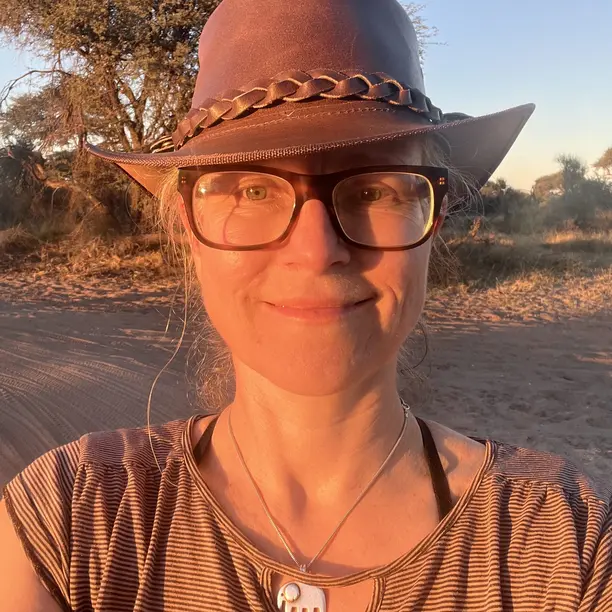
Kate is a zoologist with a focus on behavioural ecology,. Much of her research has been undertaken in Botswana with a Masters on lion parasitology (Swansea University) and a PhD on adolescence in male African savanna elephant ecology from the University of Bristol. She brings broad expertise in project management, cross‑sector collaboration, science communication, and public outreach to the team and now heads up our research project 'Selecting trees for the future.' She brings over 20 years of being a field biologist and a global perspective of biodiversity conservation challenges.
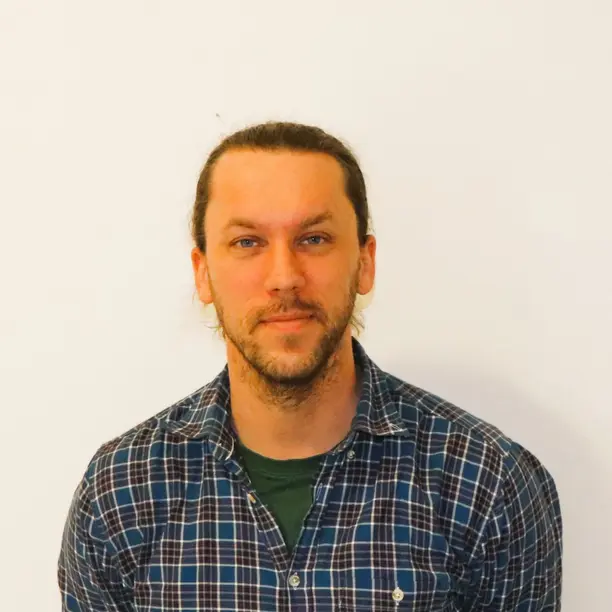
Mikael Östblom, Project coordinator
Mikael is the coordinator of the Bee-Go partnership – biodiversity and ecosystem services in the Gothenburg region – which brings together the business sector and the local authority and grew out of the SamBio collaboration project. GGBC led the SamBio project from 2023 to 2025, during which Mikael served as project coordinator for the business sector. He holds a university degree in biology, physical geography, journalism and communication, and has over two decades’ experience of working in academia on collaboration and communication relating to the environment and sustainable development.
Grazzia Matamoros
Project Coordinator
Grazzia Matamoros is a marine social biologist working in ocean education, outreach, and biodiversity. She holds a master’s degree in social-ecological resilience for sustainable development and began her career in the Mesoamerican Reef region, where she worked with coral reef conservation and fisheries management. At the University of Gothenburg, she holds multiple roles: study counsellor for the Master’s programme in Sea and Society, educator for blue projects at the Centre for Sea and Society, and project coordinator at GGBC, where she works in developing collaboration with Universeum.