HANNA TOORELL
Dissertation defense: September 19th 2025 (click for details)
Doctoral thesis: Development of novel biomarkers for brain injury and neurodevelopmental outcome in birth asphyxia
Research area: Obstetrics and Gynecology
Sahlgrenska Academy, The Institute of Clinical Sciences

During delivery, some babies experience oxygen deprivation, which in severe cases can lead to brain damage with lifelong consequences such as cerebral palsy or even death (1). To ensure timely treatment, it is crucial to quickly identify the newborns at risk of brain injury.
“Today there is only one treatment for oxygen deprivation: therapeutic hypothermia, where the baby is cooled to 33–34 degrees Celsius for three days. For the treatment to work, it has to begin within six hours after birth,” says Hanna Toorell, obstetrician and gynecologist at Sahlgrenska University Hospital, and PhD student at the Institute of Clinical Sciences.
Not all infants who develop brain injury are identified within this critical window. As a result, not every child receives the treatment they need.
Brain injury- and inflammation markers are affected
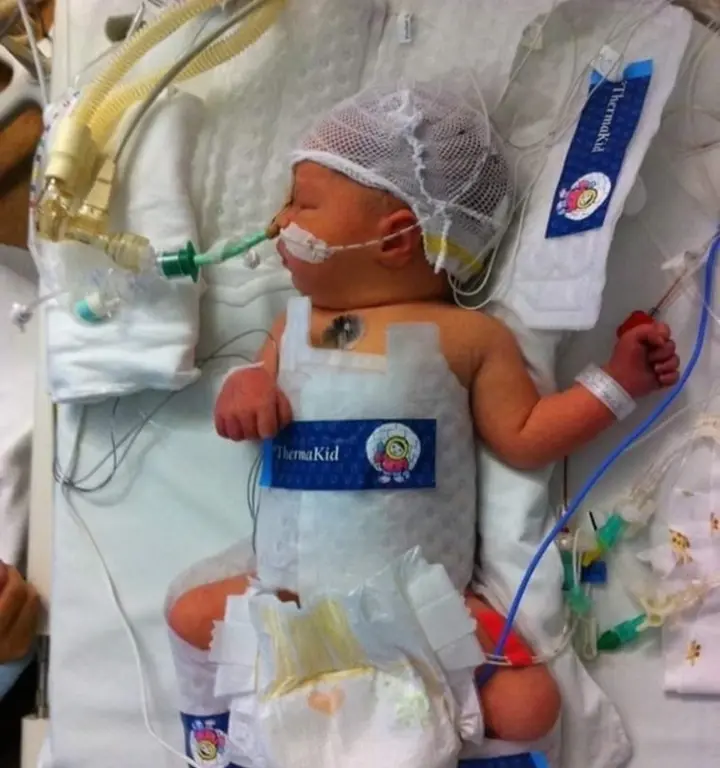
In her studies, Toorell examined different blood samples — both brain injury markers and inflammation markers — in umbilical cord blood from infants who had suffered oxygen deprivation during delivery, babies who later developed brain injury, and healthy newborns. The aim was to see whether these markers were altered in infants who later went on to develop brain injury (2). The samples are taken immediately after birth and cause no discomfort to the baby.
“We have shown that certain brain injury and inflammation markers are altered in infants who later develop brain injury compared to those who do not. This means umbilical cord samples could help identify, at an early stage, which babies need cooling treatment.”
In the future, it may be possible to monitor these markers already during labor, using blood samples taken from the fetal scalp. This could provide even earlier signs of which babies are at risk — and open the possibility of ending the delivery in time.

What has been most rewarding and challenging about the PhD project?
“It has been both exciting and rewarding to explore new diagnostic possibilities for infants who develop brain injury. In the long run, this could help more babies receive the right treatment, which in turn may reduce the risk of cerebral palsy and death after oxygen deprivation during delivery.”
But the project has also brought challenges. The blood samples came from Ireland and had to be shipped by boat to Gothenburg. This involved extensive paperwork, and it took a long time before the samples reached the laboratory. In addition, a large number of analyses and comparisons had to be carried out, covering many different substances.
Text: Susanne Lj Westergren
Facts About Birth Asphyxia
1. Brain injury caused by oxygen deprivation during delivery affects about 1–3 in 1,000 newborns. Such injuries carry a high risk of death, and for survivors, a high risk of intellectual and motor disabilities, including cerebral palsy. Brain damage often develops with some delay, hours to days after the period of oxygen deprivation.
2. About 2 percent of deliveries in high-income countries show clinical or biochemical signs of oxygen deprivation, and roughly 0.15 percent result in some degree of hypoxic-ischemic encephalopathy (HIE)