Sweden has a strong herring industry that produces large amounts of residual water rich in nutrients and valuable substances. Today, this is seen as waste that costs money to purify, while resources are lost and the environment risks being negatively affected. The SWAP project aims to turn this problem into an opportunity. Through new food-grade technology and the cultivation of blue mussels, oysters and algae, nutrients can be utilised, the water purified and new biomass created without additional feed. The result is a circular system that provides cleaner water, new sustainable food and business opportunities along the coast. The project shows how research can contribute to both healthier seas and more sustainable food production.
Project participants
Gunilla Toth, project manager, professor of marine ecology, University of Gothenburg
Henrik Pavia, professor of marine ecology, University of Gothenburg
Mats Lindegart, professor of marine ecology, University of Gothenburg
Ingrid Undeland, professor of food science, Chalmers University of Technology
Martin Kuhlin, CEO, Sweden Pelagic AB
The aim of the project
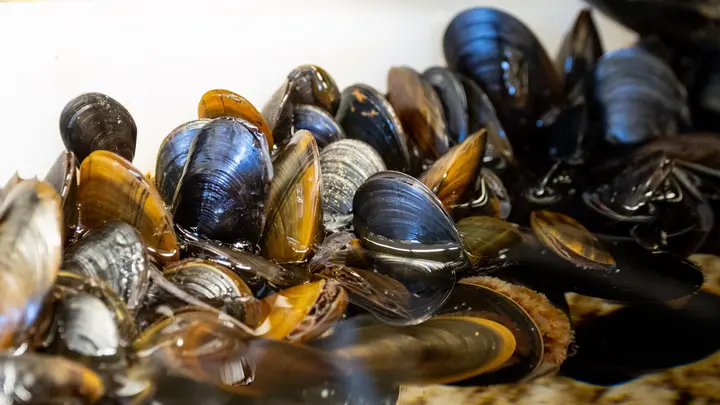
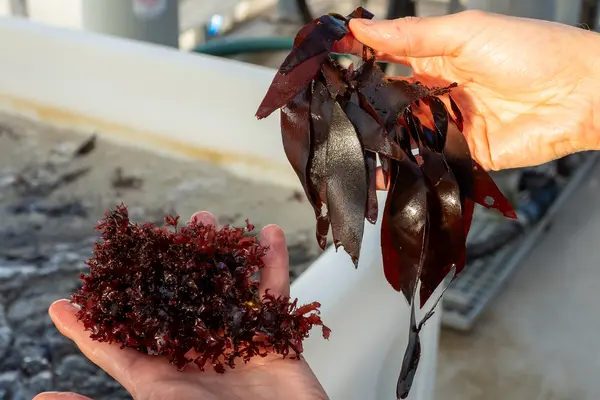
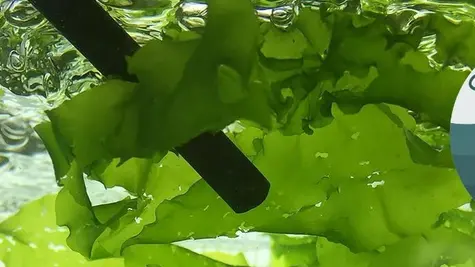
The cultivation of species low down in the food chain, such as blue mussels and oysters, requires no external feeding. Macroalgae, such as sea lettuce and dulse, also have the ability to further purify the water by absorbing dissolved nitrogen and phosphorus during their growth.
This makes it possible to create three new types of biomass from a waste water flow that has no value: from the herring itself, from bivalves and from algae, while at the same time purifying the water.
The aim of the project is therefore to create a circular and multifunctional system that:
- Purifies water and turns the costs of conventional purification into income
- Produces biomass that can be used for food, feed or bio-based products
- Increases resource efficiency in the food industry
- Creates new sustainable business opportunities along the coast
Applied research – new business opportunities
The project is based on many years of research, but now focuses on implementation and application in real environments together with industry partners and aquaculture operators. It contributes to building new knowledge and practical experience that can be used by:
- The fish processing industry and other food industries, to better manage their wastewater flows
- Public actors working with water treatment
- Policy makers who need evidence-based documentation for circular solutions
- Aquaculture operators who gain new ways to farm sustainably and profitably
The project also includes communication to broader target groups, including decision makers, industry organisations and the general public.