
On the right track for a cultural understanding
Railways have crisscrossed Sweden for 170 years. The Swedish Transport Administration has an obligation to protect the historic railway landscape when rebuilding or building new railways, but this does not always happen in practice. Two researchers will therefore investigate how the cultural environment can be better integrated into the authority’s operations.
THE SWEDISH TRANSPORT Administration has to work towards landscape-adapted infrastructure, which involves taking a holistic view of the interaction between the railway, the cultural environment and the landscape – or what can be described as the railway landscape. Sweden’s long rail corridors constitute a unique cultural environment.
“Railways are a dominant and defining feature of the landscape through which they run,” says Henrik Ranby, Professor in Conservation of Built Environments. “They make environments and nature accessible to the traveller, and new architecture is created – such as railway stations.”
Henrik believes that this perspective is not always taken into account in the authority’s operations.
“When the railway was buried in a tunnel under Varberg, many analyses were carried out of how this would affect the city. A barrier would be removed from the cityscape, and the environment would improve as the noise from trains was silenced. But there’s no mention of the fact that Varberg’s fortress also disappeared from the traveller’s gaze.”
This is ironic, he says, because at the same time we watch TV programmes about the world’s most beautiful railways.
“Trains not only have the function of moving people and goods quickly and safely from A to B. They are also of great importance for the cultural environment from the passenger’s viewpoint, which the Swedish Transport Administration is obliged to protect.”
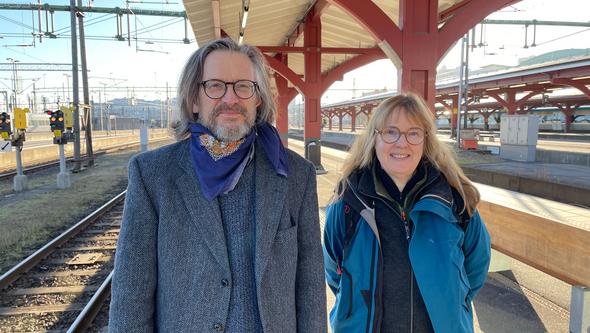
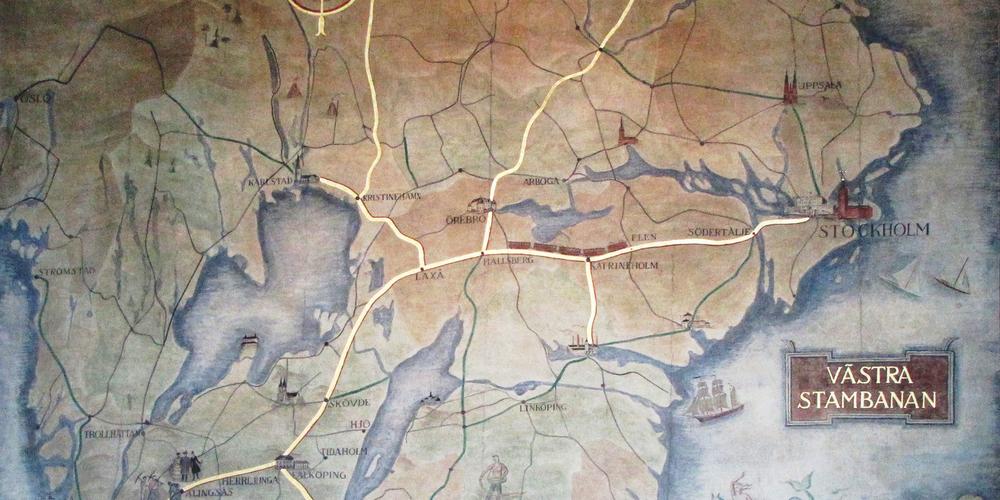
HOWEVER, ISSUES RELATING to the cultural environment’s value are being neglected in the authority’s management and maintenance. Together with his colleague Ingegärd Eliasson, a professor of physical geography, he has received funding for a two-year research project with the aim of carrying out a case study on the Western Main Line between Gothenburg and Stockholm.
“The Swedish Transport Administration wants to investigate how the maintenance of the railway affects cultural values and how the negative consequences can be minimised. Working in dialogue with them, we have formulated a project with the aim of reinforcing their competence in terms of these issues.”
THE TWO RESEARCHERS hope that the project will provide additional knowledge about the railway landscape and how the links between the past, the present and the future can form the basis for understanding the cultural environment as a sustainable resource. This will enable the Swedish Transport Administration to achieve its goal of having established management of all cultural heritage assets by 2030.
One of the project’s objectives is to start developing a conceptual model for cultural heritage values, which is something that the authority has requested.
“The conceptual model will be a kind of glossary that is intended to support the authority’s cultural conservation efforts. Giving appropriate names to phenomena is part of drawing attention to them and making them visible. The vocabulary is currently unclear, and is sometimes a bit vague.”
Henrik’s first contribution to the research project involved turning to literature to investigate the historical perspective. The railway landscape along the Western Main Line has been described ever since the 1850s, and sometimes even celebrated in song, says Henrik, who has compiled an extensive literature list of descriptions of the railway line.
THE SWEDISH TRANSPORT Administration has a policy document on landscape guidelines, with an important goal being to take care of “people’s opportunities for views and experiences, both from the traveller’s perspective and from the perspective of residents and land users”.
“As researchers, we can add to the knowledge of those working at the Swedish Transport Administration, but resources are also needed if we are to work with the issues that the policy document addresses: knowledge, finances and personnel,” adds Ingegärd.
As part of the research project, she has carried out in-depth interviews with twelve employees from the authority to find out more about the prevailing views on issues relating to the railway’s contemporary cultural environment and how this interacts with what has emerged from the historical sources.
“My interviews confirm that there is a need to strengthen the authority’s approach to the railway landscape’s cultural environment. Knowledge levels vary from person to person, and the expert knowledge that exists doesn’t extend into the complex organisation.”
Together with Henrik’s historical cultural environment analysis, these interviews will form the basis for devising the conceptual model that can be used in the authority’s maintenance plans. This is where both the Swedish Transport Administration and researchers see the greatest need for support in relation to cultural heritage issues. However, the hope is that the approach can spread to all parts of the authority.
“By establishing certain key cultural environment concepts, we want to contribute towards good communication between those who will work with these issues at the authority,” he concludes.
Text: Olof Lönnehed
WHAT: The research project “Railway, gaze and landscape – the cultural environment as a resource for landscaped infrastructure”.
WHEN: 2025–2027.
WHY: To help the Swedish Transport Administration create a model for working with cultural environment issues within the authority’s operations.
