CLIMIG - A new interdisciplinary framework for studying the relation between climate change and migration
The research programme CLIMIG sets out to establish a groundbreaking interdisciplinary research environment, uniting natural and social sciences to explore how climate change affects patterns of mobility in three of the world’s most densely populated mountainous regions: the Ethiopian Highlands, the Peruvian Andes, and the Nepalese Himalayas. To disentangle the complex interplay of factors affecting the climate-mobility nexus, this program integrates both qualitative and quantitative methods ranging from ethnographic fieldwork to nonlinear climate modelling, with the aim of developing an innovative analytical framework to advance the understanding of one of the most pressing global challenges of our time.
Truphena Mukuna, Organisation of Social Science Research in Eastern and Southern Africa, Ethiopia
Aysheshim Terefe, University of Gondar, Ethiopia
Dil Khatri, South Asia Institute of Advanced Studies, Nepal
Gyanu Maskey, South Asia Institute of Advanced Studies, Nepal
Sanjaya Khantri, South Asia Institute of Advanced Studies, Nepal
The CLIMIG research program at the University of Gothenburg currently employs two postdoctoral researchers and one Ph.D. candidate.
Ibrahim Wahab, a postdoc in social and economic geography, specializes in qualitative, quantitative, remote sensing, and GIS methods. He leads the design and deployment of quantitative data collection and analyses demographic and migration patterns across the program sites, collaborating closely with Xiaoye Yang to integrate meteorological data and climate change perceptions.
Xiaoye Yang, a postdoc in meteorology at the Department of Earth Sciences, focuses on projections of extreme climate and weather events. On the CLIMIG research program, Yang is focusing on integrating climate data with survey data using statistics and machine learning to explore the impact of extreme weather changes on migration patterns.
Deki Choden, a Ph.D. candidate at the School of Global Studies, is extending the program to Bhutan. Her research examines the relationship between climate change and (im)mobility in a rural Bhutanese community, employing a mixed-methods approach that combines ethnographic case studies with quantitative climate and migration analysis.
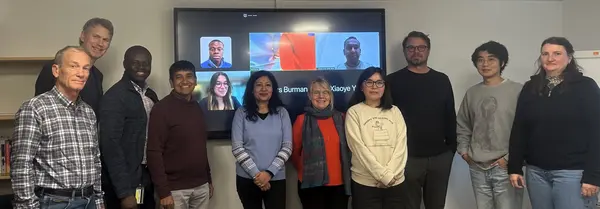
The CLIMIG team during the 2024 conference at the School of Global Studies, University of Gotherburg.
About the project
Climate related mobility has emerged as a politically contested issue that has raised concerns ranging from resource sharing and the capacity of receiving societies to the heightened vulnerabilities faced by migrants. This research program examines how climate change interacts with other social, cultural, economic, political and ecological drivers of mobility, their interactions, and variations across regions and scales of governance in diverse continents. By mapping the key drivers of mobility and uncovering underlying patterns and regularities, the program aims to develop our understanding of the complex dynamics at play, and establish an interdisciplinary framework for the study of climate related mobility. The program focuses on mountain regions as they are among the most vulnerable habitats to climate change, and showcases how accelerated environmental shifts trigger natural disasters, exacerbate social tensions, and threaten livelihoods - driving local populations to move.
Although climate driven mobility has garnered significant attention from scholars worldwide, few efforts have embraced a truly interdisciplinary approach. CLIMIG bridges this gap by uniting experts from diverse fields, including climatology, human geography, human ecology, international relations, and social anthropology, to re-conceptualize the dynamics of climate mobility. The program is hosted by the School of Global Studies (SGS) at the University of Gothenburg, in affiliation with the Department of Earth Sciences and the Centre on Global Migration (CGM). It is conducted in collaboration with the University of Oslo, Pontificia Universidad Católica del Perú (PUCP), the Organization of Social Science Research in Eastern and Southern Africa (OSSREA) in Ethiopia, and the South Asia Institute of Advanced Studies (SAIAS) in Nepal. Together, these institutions foster an interdisciplinary and innovative research environment that actively engages both junior and senior scholars from the Global South and North.
To ensure its relevance for a global audience of stakeholders, the research program creatively integrates quantitative data on both climate and migration with qualitative insights that capture the lived realities of peoples on the move, as well as those staying put, amid environmental upheaval. This approach not only meets the basic scientific needs of policymakers, but also integrates local knowledge and emotive storytelling to make complex academic concepts accessible for wider audiences.
To account for climate change as both a context for and a driver of mobility within cutting edge theories of migration and mobility;
To rethink the relation between different drivers of climate mobility to better account for empirically observed human mobility patterns;
To integrate complex biophysical and social political data in innovative ways by designing an analytical framework that tests particular constellations of drivers, including quantification of their relative importance.
What forms of mobility exist in rural Ethiopia, Peru and Nepal and how have these changed during the last 30 years?
How does climate change affect mobility dynamics, especially people’s propensity to move?
How does climate change intersect with other mobility drivers?
How can in-depth local level social and political data best inform the development of fine-grained regional climate models?
To address these questions, the program employs a combination of quantitative and qualitative methods, including surveys, interviews, network mapping, non-linear climate modelling, as well as participant observation. The interdisciplinary and internationally collaborative characteristics of the program provides diverse expertise and complementary methodological approaches to the study of climate mobility.
Paerregaard, K. (2023) ‘Climing the Andes: Vertical Complementarity, Trans-Human Reciprocity, and Climate Change in the Peruvian Highlands.’ in Yü, D.S. and Wouters, J.J.P. Storying Multipolar Climes of the Himalaya, Andes and Arctic. Pp. 52-68. London: Routledge.
Paerregaard, K. (2024) ‘Afterword: A Himalayan climes and multispecies encounters.’ in Wouters, J.J.P. and Yü, D.S. Himalayan Climes and Multispecies Encounters. Pp. 215-223. London. Routledge.
Now in its fifth year, the research programme has made significant progress, and the team is eager to share the latest developments. In preparation for fieldwork in each country, the teams conducted comprehensive literature reviews on migration history, location-specific drivers of migration, and climate data for each selected field site. Subsequently, the survey data collection was successfully completed in Ethiopia, Nepal, and Peru. In total, the sample included 835 respondents with a 45.5 % and 54.5% female-to-male respondent ratio. This data will lay the ground for the programme’s continued progress under the years to come.
In November 2024, a two-day workshop brought together the research team from all participating countries at the University of Gothenburg, both onsite and online. At the conference, the entire research team, with its diverse expertise and disciplines, had the opportunity to meet, discuss updates, share insights, and brainstorm new ideas.
During the two-day workshop held on August 27–28, 2025, at the University of Gothenburg, researchers working in the Ethiopia, Nepal, Peru, and Bhutan teams came together to discuss the development of the Climig project. Each team presented their findings from fieldwork and migration/climate change data collection during the past year, followed by general discussions where all participants were encouraged to share their insights and reflections. The workshop fostered many interesting discussions and provided an overview of what has already been achieved as well as the challenges that lie ahead.
Currently, programme team members, in various constellations, are working on research articles of both a conceptual and empirical nature. Worth mentioning is a review article written collectively by several members, taking stock of previous conceptual frameworks for studying climate (im-)mobility and designing a new framework and research agenda. An earlier version of this article was presented at the 22nd Nordic Migration Research Conference at the University of Bergen in August, 2024.
Lastly, the CLIMIG project team based at SGS is presently in the process of developing the Nordic Research Network of Global Climate Migration, with partners from the Danish Institute for International Studies (DIIS) Denmark, the Migration Institute of Finland, (MIF), Finland and Chr. Michelsen Institute (CMI), Norway. The network aims to strengthen Nordic collaboration and exchange on the rapidly growing and globally important field of climate migration. This network will contribute both to Nordic research excellence and to more informed Nordic and international debate and policymaking on climate change and mobility. Please look out for webinars and other activities of the network.
Learn more about the latest updates from each country below.
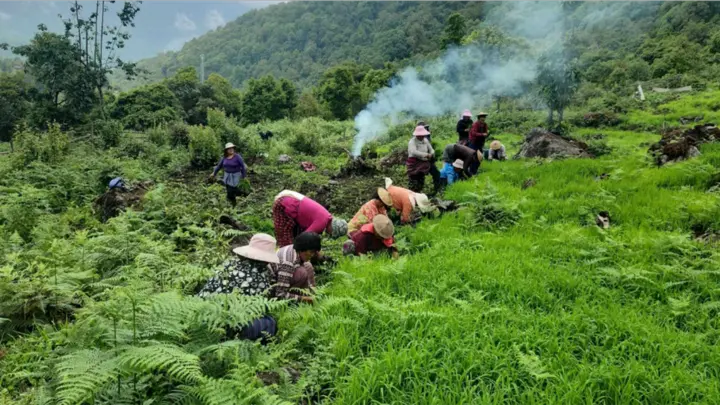
The research team in Nepal successfully finalized over 300 household surveys in the field site, which is a promising ground for the quantitative analysis to come. Furthermore, the qualitative data collection applied participatory village mapping with key informants and leaders of the village; household interviews; informant interviews; focus group interviews; as well as informal conversations at the local and municipal level. Altogether, three fieldwork excursions including ethnographic data collection and survey data collection were completed during 2023-2024.
Currently, the research team in Nepal are tasked with interview transcription and analyzing key themes derived from ethnographic field insights in relation to quantitative, demographic, and migration data in order to develop ideas for scientific articles. Additionally, researchers from the Nepal team have been contributing to the program’s conceptual paper along with other country team members.
The research team in Nepal has also actively participated in conferences including the CESLAM (Centre for the Study of Labour and Mobility) Kathmandu Migration Conference. The virtual conference was organized by Social Science Baha in February 2025. The team also participated in the Roundtable Consultation on Climatic Risks and Intersectionalities in the Hindu Kush Himalaya Region in January 2025, organized by International Centre for Integrated Mountain Development (ICIMOD).
Looking forward, the teams’ objective includes engaging with national-level stakeholders and researchers focused on climate-mobility issues, continuing the data analysis to identify gaps, and plan for further fieldwork to gather additional ethnographic data.
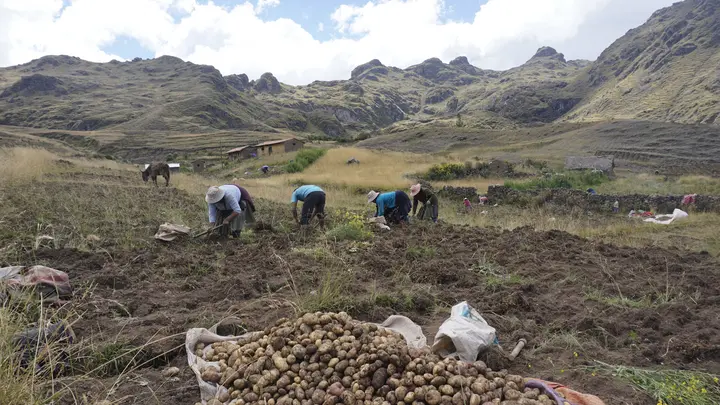
In Peru, the research team successfully completed fieldwork in the communities of Ccamahuara and Tiracancha in the San Salvador district within the Cusco region in Peru. A total of 67 household surveys were conducted in Ccamahuara and 105 in Tiracancha, respectively.
The qualitative data collection applied structured interviews in both Ccamahuara and Tiracancha where respondents included both authorities and households. The interviews also included migrants in the cities of Cusco and Lima as respondents.
Currently, the research team is tasked with analysing the data collected during the fieldwork. Since the current focus is on qualitative material and the development of general reports, the quantitative data has only been partially analyzed to understand the diachronic demographics of both communities and migration patterns.
Looking forward, the research team in Peru will continue the analysis of the qualitative material and propose dialogues with the quantitative data in order to elaborate a research article focused on these specific communities and their migration patterns.
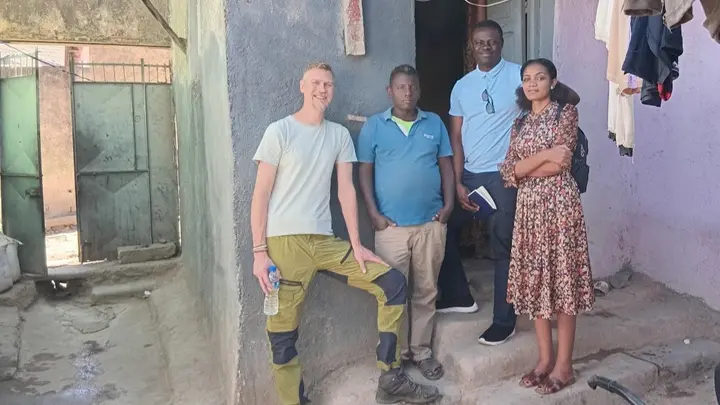
Despite facing adversities due to the escalated security situation in Ethiopia, the research team has managed to lead the program forward and has made significant progress. One community in the mountainous Amhara region in Ethiopia was chosen as field site for its migratory patterns and climatic conditions. In the Amhara region, the research team managed to produce household survey data with a total of 290 respondents. Followingly, the results underwent an initial analysis and was compiled into a survey report.
Due to the escalated violence in Ethiopia and the Amhara region during 2024 and the beginning of 2025, the research team could not return to the field site for the collection of qualitative date as quickly as initially intended. Nonetheless, after actively exploring possible options and with collaboration with the International Organization for Migration (IOM) in Ethiopia, the team managed to continue its field research and completed the collection of valuable qualitative data at the end of 2025.
Looking ahead, the team's objective is to continue the initial analysis of the quantitative data, and start engaging with the recently obtained qualitative data.
Photo: Angelica Harms
Upcoming events
2026
21-23 June: Workshop at the University of Gothenburg with the CLIMIG team from Ethiopia, Nepal and Peru. Findings from the recent fieldworks will be presented.