Circular grassroots innovations for sustainable and inclusive urban transitions
The project examines the challenges and opportunities that urban circular grassroots innovations encounter to create, maintain and scale their solutions for sustainable and inclusive transitions from below. Researchers from six universities in the cities of Amsterdam, Barcelona, Nantes and Gothenburg participates together with grassroots organisations and initiatives from the cities.
Overview
Project time
2023
Status
Active
Research type
Research group
Research areas
Sustainability and environment
Society and economy
Business Administration
Environmental Social Science
Public Administration Studies
Responsible organization
School of Global Studies
Research financier
DUT/Formas
Project contacts
Maria Jose Zapata Campos, Professor of Management and Organization, Senior lecturer in Global Development Studies, PI Gothenburg
Symposium: Circular Grassroots - Infrastructures of Care and Postgrowth Urban Transformations
The research project will host a symposium at the School of Global Studies in Gothenburg on 7-8 December 2026. It will be a convivial gathering on circular grassroots initiatives, care, commoning, justice, and postgrowth urban transformations.
Over the last three years, the Circular Grassroots project has explored how grassroots initiatives create, sustain, and transform urban life through practices of repair, reuse, redistribution, sharing, and collective care. Drawing on research in Amsterdam, Barcelona, Gothenburg, and Nantes, we have examined how these initiatives navigate questions of space, governance, and inclusivity, while contributing to more socially and environmentally just urban futures.
Circular grassroots initiatives generate significant environmental, social, and democratic value. They reduce waste, extend the lifespan of materials, support livelihoods, create infrastructures of care, and foster participation and learning. Yet despite these contributions, they often remain invisible, under-supported, and poorly understood. Their everyday work reveals both the possibilities and the tensions of grassroots action: between autonomy and institutionalisation, inclusion and exclusion, experimentation and durability, subsistence and ideology, transformation and stabilisation.
The symposium aims to bring together scholars working on related themes, including material circularity, commons, care, grassroots initiatives, postgrowth, alternative economies, social and solidarity economy, repair and reuse cultures, and environmental justice.
We envision an informal gathering with a limited number of participants will present ongoing work, while others will act as discussants and conversation partners. We hope to create a space for collective reflection, intellectual exchange, and future collaborations around the challenges and possibilities of grassroots-led socio-ecological transformations.
Possible themes for discussion include, but are not limited to:
Circular grassroots initiatives and postgrowth transformations
Infrastructures of care and commoning
Subsistence circularities and socio-metabolic inequalities
Repair, reuse, and sharing cultures
Grassroots governance and public-common partnerships
Space, visibility, and the right to the city
Intersectionality, inclusion, and environmental justice
Grassroots valuation and alternative economies
Grassroots paradoxes and the politics of transformation
The symposium will take place over one and a half days and will include presentations, collective discussions, shared meals, and opportunities for informal exchange.
In the spring of 2026, the Circular Grassroots project convened a series of four webinars focusing on metabolic contributions, environmental conflicts and contestation, value creation beyond monetary valuation, and space governance regimes associated with grassroots initiatives for just post-growth cities.
The webinar series brought together insights from the Circular Grassroots research project, funded by the Driving Urban Transitions (DUT) programme, alongside perspectives from grassroots activists, municipal officers, politicians, and leading researchers in the field. Contributions draw on experiences from four European frontrunner cities, Amsterdam, Barcelona, Nantes, and Gothenburg, while also engaging a broader range of voices and expertise.
Webinar 2: Environmental Conflicts and Grassroots Contestation Book Launch Event: “Contested Waste: Environmental Conflicts and Waste Picker Resistance in the Global South” Watch the film of the webinar (youtube)
The project aims at examining the challenges and opportunities that urban circular grassroots innovations encounter to create, maintain and scale their solutions for sustainable and inclusive transitions from below. Cities are spaces of overconsumption, waste-intensive production, and high environmental footprints, but also hubs for creativity and innovation. Citizens experiment with a wealth of innovations to address the challenge of a steady consumption growth and overuse of resources. Despite their contributions further research is necessary to investigate the challenges and opportunities to diffuse these practices in terms of:
a) space (in central/periurban city districts), b) collaborative and democratic arenas among local government, urban planners and grassroots organizations, c) inclusivity and scalability of the grassroots initiatives (challenges to meet their ambitions, grow, replicate and expand their sharing/circularity practices).
How we work
The project adopts an inter/transdisciplinary and participatory action-research approach in Amsterdam, Barcelona, Gothenburg and Nantes, building on our previous research from several disciplines (sociology, human geography, urban planning, social psychology, consumption, business and public administration) and areas (repairing, housing, food, recycling). The project supports the scaling of the innovations by facilitating knowledge co-production among activists, social enterprises, scholars and policymakers.
Waste Commoning as Critical Answer to the Property Question”, in Hervé Corvellec (Ed)Waste as Critique, Patrik Zapata and María José Zapata Campos,Oxford University Press, 2025.
Amsterdam is facing an increasingly severe housing crisis, the result of liberalising social housing provisioning and promoting mortgaged homeownership (Wijburg, 2021). In recent years, the municipality of Amsterdam has been more active in combatting these tendencies and has in this context launched the so-called "Action Plan Housing Cooperatives", which seeks to realise 15 to 20 housing cooperatives within 4 years, with the ultimate goal of realising 10% of the housing stock being cooperatively-owned by 2050.
A housing cooperative (Dutch: wooncoöperatie) is a form of collective housing, whereby a cooperative (of residents) either owns or manages the building, taking decisions democratically, while the amount of shared spaces and the closeness of the community may vary (timetoaccess.com).
Our project explores and works with one of the first of many grassroots initiatives that has emerged following this call: De Nieuwe Meent, a housing cooperative in the East of Amsterdam. This initiative is on the verge of being completed after a 6-year participatory planning process with radical architects from Time to Access. It builds specifically on values of diversity, sustainability, the commons and care. Indeed, the Dutch word ‘meent’ is an old world for the commons.
Examining this pilot cooperative is an excellent way of examining the potential of such initiatives in enabling circular and shared ways of housing and living. It also allows to consider the extent to which these initiatives manage to build durable and affordable alternatives to the capitalist housing market, therefore providing a way to escape the housing crisis from the grassroots. We explore these questions in the context of post-growth and/or post-capitalist ideals.
We explore these questions by focusing on:
Infrastructures (both material and immaterial) that underpin the functioning of the cooperative, and whose elaboration we view as being subject to both outside pressures (e.g. finances) and internal processes of continuous adaptations.
Cultural politics and issues of attachment and detachment in particular, that we deem crucial to understanding the ways in which ideals of circularity, sharing and commoning are practiced in the organisation of and daily life in the cooperative.
The project is led by two researchers:
Federico Savini, Associate Professor in Environmental Planning, Institutions and Politics and PI of the project
Elisa Schramm, Postdoctoral Researcher in Urban Planning, dedicated full-time to this project.
Collaboration partner
The project is developed in close cooperation with the radical architect collective Time to Access.
Barcelona's density and richness of grassroots and community experiences can be explained by the city's historical background, linked to experiences of self-management and social movements, and by the recent municipalist politics emerging from 15M. However, despite this fertile socio-economic hummus, there are also tensions between privatisation/consumerism and progressive policies on cooperativism and sustainability. In the context of the complex urban dynamics of a city strained by its touristification, community-based repair and reuse initiatives have emerged (e.g. BCN ReCircula) to engage residents in the circularity of their goods and in everyday sustainable and eco-social care practices.
This project focuses on two repair and reuse grassroot initiatives, Libraries of Things and Restarters BCN, exploring their features, challenges and opportunities in order to explore the possibilities of scale up and establish more extended and strong repair and reuse networks.
The Libraries of Things
This initiative offers a sustainable model for sharing resources within the community, by lending services where members can borrow various tools and objects promoting reuse and reducing the need for new purchases. This way, they enhance community networks by providing access to tools and resources that might otherwise be unaffordable or inaccessible.
Map of the Libraries of Things in Barcelona.
Video of Libraries of Things: Campaign “Better than mine, ours”.
Restarters BCN
Restart Parties are free, public and community events, organized by the Restarters BCN collective, where participants are pedagogically guided by volunteer repairers in order to fix their own electronic devices. This collective promotes the repair culture in order to reduce electronic waste by extending the life of devices and it promotes ecological and economic benefits through repair rather than replacement and purchase. This way, “we don’t only repair electronics, but our relationship with them”.
Objectives
The objectives of our project are to examine the challenges and opportunities that arise in the creation of these community recirculation spaces and the possible collaboration and synergies between the formal and informal waste management and prevention sectors.
This project is led by a team of two researchers:
Blanca Callen Moreu, Lecturer in Social Psychology, with a focus on material cultures, design and collective action in the face of the ecosocial crisis.
Anastasia Zisakou, postdoctoral in Social Psychology with a focus on urban citizenship, migration studies, inequalities and social movements.
Collaboration partners
The project is being developed in close collaboration with:
BIT-Habitat, Urban Innovation Agency BCN A foundation that drives urban innovation to address the social, economic, technological, and environmental challenges in the city, aiming to foment healthier, more sustainable, competitive, and equitable strategies and actions while also improving the quality of life for its residents.
Barcelona Activa, Local Economic Development Agency A public trading company integrated in the area of Economy and Economic Promotion of Barcelona City Council whose mission is to promote quality employment, entrepreneurship, business competitiveness and the diversification of the productive fabric, in order to achieve a sustainable, inclusive and fair economic model.
Rezero, Foundation for Waste Prevention and Responsible Consumption A private, independent, non-profit organisation, founded in 2005, that seeks new solutions to extend the life of products and materials by facilitating their reuse and to eliminate the generation of household waste.
Restarters BCN A non-for-profit collective formed in 2015 and constituted of 100% voluntary people dedicated to the promotion of the repair (in opposition to discard) of electric or electronic equipment to confront planned obsolescence and consumerism.
Environment Unit, Metropolitan Area of Barcelona (AMB) The metropolitan area of Barcelona, with an area of 636 km2 and more than 3.3 million inhabitants is one of the largest metropolitan areas in Europe.The Environment Unit includes various Directorates such as Water, Climate Change, and Waste and AMB is responsible for managing waste, while promoting its reduction, selective collection, recycling, and possible reuse.
Publications and output
Some publications of the research team on the topic of repair & reuse:
Designing through Planetary Breakdown: Locating Material Knowledge and Practical Skill Duque, M. & Callén, B. (in press). Repair-led Learning for Design Education. In: Adams, J. & Carr, Ch. (eds). Routledge
Postcards from Abroad Callén, B., Duque, M., Callén, E., Andrés, P., González San Emeterio, A., Gallego, S., Céspedes, S., Caballé, M., Lampón, C., Martínez, N., & Martínez-Rivera, O. (2023). Diseña, (23), Postcards.
“Basura electrónica. Cosmovisiones reparadoras para una ética de los residuos“. Callén, B. (2023). In: M. Rispoli, R. Rispoli (Eds.), Design, STS e la sfida del più-che-umano/Diseño, STS y el desafío de lo más-que-humano (pp. 100-110). Terraformazioni #1. Napoli: Cratèra Edizioni, (ISBN 979-12-80884-10-7)
On the Social Dimensions of Disposal Akese, G., Callén, B. & Wenger, J. (2022). VIGIA: Elektro-Schrott (Zeitschrift Für Technologie und Gesellschaft). Ausgabe 2: "Elektroschorott". Pp. 28-41. Zürich: Verein Vigia
Intimate with your junk! A waste management experiment for a material world Callén, B. & López, D. (2019). Sociological Review. Special Issue “Intimate Entanglements in Science and Technology”. Volume 67 Issue 2, March 2019. pp. 318-339
The making of obsolescence: how things become public in the age of precariousness Delgado, A. y Callén, B. (2017). Public Understanding of Science (Special Issue). Vol. 26(2) 179–194. DOI: 10.1177/0963662516647348
Donner une seconde vie aux déchets électroniques (Recreating e-Waste: Informal expertises and socio-technical innovation from the margins) Callén, B. (2016). Techniques&Culture 65-66 « Réparer le monde. Excès, reste et innovation », p. 206-219 ISBN 978-2-7132-2529-1
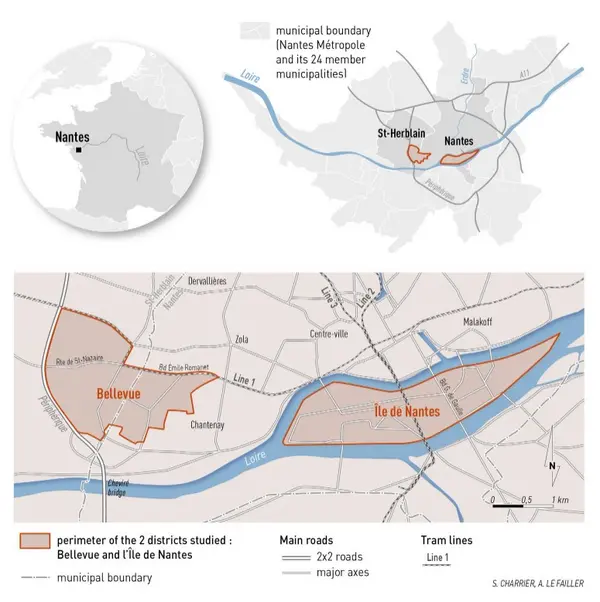
In the medium-sized town of Nantes, located in western France and home to approximately 300,000 inhabitants, grassroots initiatives have played a pivotal role in raising awareness and addressing social and environmental challenges (Ecopôle, 2014). These citizen-led movements have faced both support and threats, especially since Nantes was named the European Green Capital in 2013. While some initiatives thrived and scaled up, others faded away.
This project offers a unique opportunity to explore the evolution of these grassroots environmental actions in Nantes, emphasizing their importance and ensuring their sustainability.
To achieve this, we are focusing on food circularity, a topic that has been underrepresented in transition studies, despite its significant impact on the socio-environmental metabolism of cities. Nantes is already home to numerous food-related initiatives that can be considered innovative practices for sustainability. The recent changes in legal frameworks, coupled with increasing involvement from citizen groups, the public, and private sectors, make it a compelling time to examine this circular approach.
Our study will specifically explore areas such as:
urban agriculture
food distribution and consumption
organic waste management
resource valorization and reuse
food packaging, transport
waste prevention initiatives
Two distinct areas in Nantes will serve as primary research sites:
A central, gentrified area marketed as Nantes’ new city center, historically industrial, but still home to a working-class community.
A disadvantaged working-class neighborhoodlocated on the city’s outskirts, mostly comprising social housing, currently undergoing urban renewal.
This project is led by a team of four researchers:
Jean-Baptiste Bahers, a research fellow in geography, specializing in urban metabolism and waste management.
Mathieu Durand, a senior lecturer in geography and urban planning, with a focus on environmental justice and waste management.
Cyria Emelianoff, a senior lecturer in geography, specializing in sustainable cities.
Aline Le Failler, a PhD student in social geography, dedicated full-time to this project.
Collaboration partner
Operationally, the project is being developed in close collaboration with Ecopôle, a local association dedicated to environmental education and the coordination of environmental stakeholders within the Nantes region.
The Gothenburg part of the project, which also leads and coordinates the consortium, is to contribute with knowledge from a Northern European perspective with a traditionally well-developed welfare system, which is experiencing increasing inequality and segregation between city districts.
Gothenburg is developing and expanding at a rapid pace, at the cost of reduced spaces for grassroots activities. New forms of collaboration are simultaneously emerging through various experiments with the sharing economy and circularity. In this sub-project, we study how spaces can serve multiple functions in both central and peripheral areas, in private and public buildings and places, and in different socio-economic parts of the city. Additionally, we will explore how the local government's organization, together with civil society, can work to create participatory and supportive infrastructure for grassroots initiatives, as well as the challenges and opportunities for scaling up and spreading these innovations within the city, to other cities and countries.
This project is led by a team of four researchers from two universities, Chalmers university of technology and University of Gothenburg:
Associate prof María José Zapata Campos, PhD in urban sociology, docent in business administration University of GRB, Sweden (University of Gothenburg). Expert in social movements, SSE, and public-private collaboration in Sweden, Spain, East Africa and Latin America.
Associate prof Marco Adelfio, in Applied Urbanism, (Chalmers, Sweden). Expert in multistakeholder dialogue, co-production of knowledge, social inclusion and bottom-up urban transformation processes, and transferability of urban practices.
Senior lecturer Ulrika Holmberg, Marketing, University of Gothenburg. Director of the Consumption Research Centre, at GU, expert in recycling & sustainable housing.
Professor Patrik Zapata, Public Administration University of Gothenburg. His research concerns local governments, sustainable city organizing and local public and community collaboration.
Collaboration partners
The project is being developed in close collaboration with:
Majorna Collaboration (Majornas Samverkansförening) Majorna Collaboration (MC) is a grassroots organization focusing on local urban development, youth activities, and citizen initiative. In 2005 the local youth center was shut down by the municipality. A group of parents organized to protest and later started MC to take over the youth center building (the Activity house) and organize youth activities on their own. Since then MC has been operating from the Activity house, with a lot of focus on children and youths, but also on making the local residential area a better place to live through different kinds of projects.
Solidarity Fridge - Solikyl Göteborg The Solikyl is since 2015 a grassroots, open and collaborative project aimed at reducing food waste occurring at households, supermarkets, restaurants, events, through a physical and digital infrastructure (with public food sharing points and a digital platform). Currently there are ten Solidarity Fridges (distribution points) at the city and agreements with more than 25 grocery stores and bakeries
The Democracy and Citizen Service, City of Gothenburg The Democracy and citizen service Administration coordinates and develops the city's common service to those who live, visit and work in the city. The administration conducts proactive democracy work and also leads the city’s work on creating good conditions for sustainable living in the city, as part of The Environment and Climate Programme for the City of Gothenburg 2021-2030 which is the guide and the shared platform for the city’s strategic long-term work for the environment.