

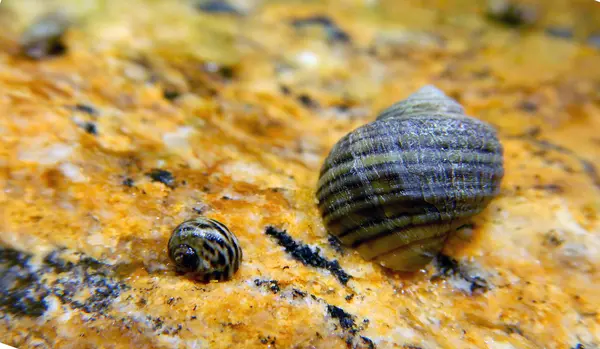
The origin of new species by the splitting of existing species is a key evolutionary process. This process requires the evolution of traits that restrict successful reproduction between divergent populations. We are studying traits of this type, and their genetic basis, in a coastal marine snail Littorina saxatilis. This snail shows strong adaptation to different habitats, repeatedly throughout its North Atlantic range. Successful interbreeding between populations in different habitats -ecotypes- is reduced by this differential adaptation, by a tendency of snails to mate with similar individuals and, in some places, by a tendency of snails to choose the appropriate habitat. Genetically, many of the important traits seem to be controlled by chromosomal inversions – structural changes in the genome that hold together many different genes.
More information
The project has been completed, but further research into evolution and gene exchange is ongoing within the Marine Molecular Ecology Group.


