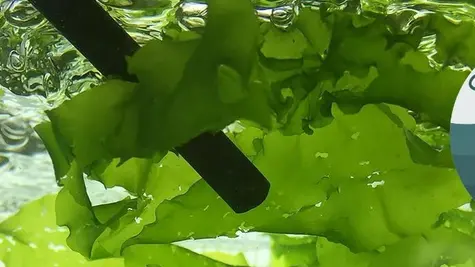
The SEAlgaePower project aims to develop technologies where microalgae can clean nutrient-rich residual waters from aquaculture and seafood processing industry, while simultaneously producing biomass for development of novel food, fish feed, fertilizer, medical, nutraceutical, and pharmaceutical products in a sustainable way.
About
Background
The fast-growing aquaculture and seafood processing industry generate large amounts of nutrient-rich wastewaters, posing a high cost for discharge. There is a lack of technologies for valorisation of these wastewaters, while there is an increasing demand for new resources intended for carbon-neutral production of food, material and energy. The ability of microalgae to perform photosynthesis and efficiently convert dissolved nutrients into valuable biomass could contribute to solving this dual problem.
Overall objective
The SEAlgaePower project will develop innovative technologies where microalgae can clean currently wasted nutrient-rich water from the aquaculture and seafood processing industry while simultaneously producing biomass for development of novel ingredients in a sustainable way.
Specific objectives
(I) select suitable microalgae species/strains from the North and the Mediterranean Sea in a lab-scale cultivation system based on the ability to grow in different wastewater types; (II) develop pilot-scale algae cultivation protocols and wastewater cleaning; (III) develop biorefinery protocols for protein, lipid and carbohydrate recovery from the microalgal biomass; (IV) develop microalgae-based prototypes and ingredients; (V) assess environmental and socio-economic aspects associated with the project solutions on wastewater cleaning, microalgae cultivation and biomass valorisation, and (VI) maximise the project impact, visibility, and legacy.
Members
- Cornelia Spetea Wiklund, professor UGOT and project coordinator
- Giorgia Carnovale, postdoctoral researcher UGOT
- Ingrid Undeland, professor Chalmers
- Markus Andersson Trojer, senior researcher RISE
- Jonas Lundberg, CEO Klädesholmen Seafood AB