The purpose of this research project is to map the education Swedish medical students have received in disaster medicine in recent years, if there are differences between the universities, and if there are plans to expand or reduce the disaster medicine education in the new medical program.
Background
Disaster medicine is a science dedicated to developing and evaluating methods to cope with situations where available resources are insufficient compared to immediate medical needs. In recent years, the subject has not been a mandatory part of Swedish medical school curricula. Since 2021, a new, six-year medical degree is being implemented in Sweden and it remains to be seen how disaster medicine will fit into the new curriculum.
Aim
Investigate to what extent Swedish medical students have been taught disaster medicine recently; which teaching methods are used; plans regarding disaster medicine within the new, six-year medical degree; and whether this differs between universities.
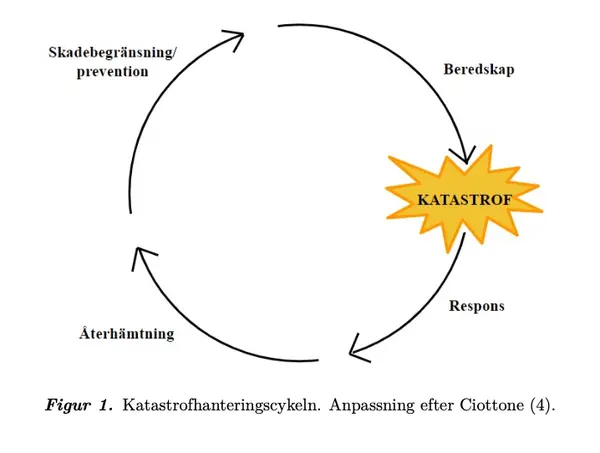
Figure 1. The disaster management cycle. Customization by Ciottone (4)
A systematic reading of curricula from every Swedish medical school was done to determine whether disaster medicine is included in the mandatory education. Semi-structured interviews were conducted with representatives from six of the seven medical schools to explore matters such as teaching methods and plans for the new six-year medical degree. Interviewees were responsible for disaster medicine education or members of the board of education. Interviews were analyzed using qualitative content analysis.
Results: All Swedish medical schools teach disaster medicine, though the extent and teaching methods vary. The most common teaching method is lectures; other methods include case discussions, tabletop exercises, and disaster simulation exercises. The medical schools plan on either continuing the current disaster medicine curriculum or expanding.
Conclusions: The type and amount of education in disaster medicine that Swedish med- ical students are exposed to differ between universities. Preliminary plans for the new medical degree suggest differences are likely to remain.
Sofia Olsson, medical student at Gothenburg University Yohan Robinson , main supervisor and director of Center for Disaster Medicine Fabian Taube, researcher in the department of community medicine and public health, main position at the Defense Medicine Center in Gothenburg.
Nils Rosario Högberg - Anders Jonsson -professor specializing in disaster medicine and stress research, stress in emergency services, work management at the scene of an accident, at the University of Borås Anton Mittendorf - PhD Student at Karolinska Institutet