What can a shipwreck on the seabed tell us about early polar exploration? In 1903, the expedition vessel Antarctic sank in the Weddell Sea after being crushed by sea ice during Otto Nordensköld’s Swedish Antarctic expedition. More than 120 years later, the wreck’s exact position remains unknown. Now, researchers at the University of Gothenburg, together with Argentine and Ukrainian partners, are set to attempt to locate the ship, investigate its state of preservation and develop methods for the digital documentation and preservation of marine cultural heritage in Antarctica.
The project forms part of the interdisciplinary research programme ‘Pulse of the Weddell Sea’, which coordinates Swedish research into the climate, oceanography and ecosystems of the Weddell Sea. The programme is being carried out with research infrastructure and expedition support from the Swedish Polar Research Secretariat.
A central place for polar research
The Antarctic was built in Norway in 1871 under the name Cap Nor and was originally used for seal hunting in the Arctic. The vessel later took part in several scientific expeditions in both the Arctic and Antarctica. In 1895, it was used on an expedition that carried out one of the first documented landings on the Antarctic continent.
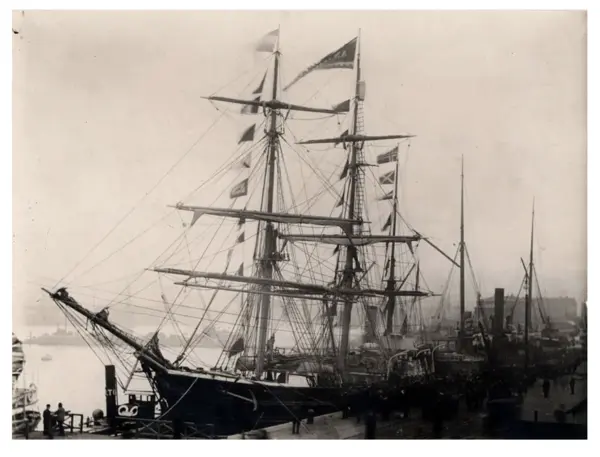
In 1901, the Antarctic set sail from Gothenburg as the expedition vessel for the first Swedish Antarctic expedition, led by the geologist Otto Nordenskjöld. The expedition had extensive scientific ambitions and carried out research in fields including geology, geography, meteorology and zoology.
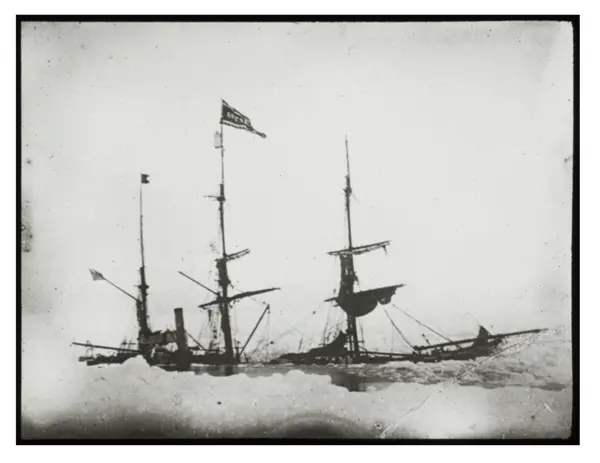
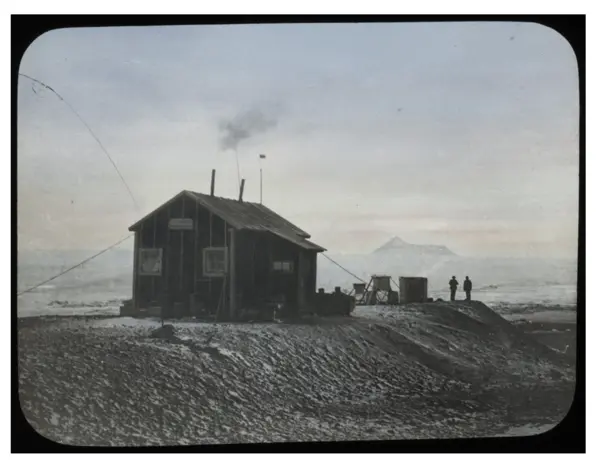
A research team established a wintering station on Snow Hill Island, whilst the ship continued its voyages in the area. When the Antarctic was due to return to collect the researchers, it was prevented from doing so by severe ice conditions. The ship became trapped in pack ice, was severely damaged and sank on 12 February 1903.
The sinking meant that the expedition’s members were forced to overwinter in three separate locations under extreme conditions. The survivors were finally rescued in November 1903 by an Argentine rescue expedition.
The Antarctic thus holds particular significance for Swedish and international polar history. The ship represents both the early scientific exploration of the polar regions and the international collaborations that contributed to the development of modern polar research.
From historical sources to marine heritage
Although the shipwreck is well documented, the wreck has never been identified with certainty on the seabed. The ship’s final position is uncertain as it drifted with the pack ice for several days before sinking.
The researchers are combining historical sources with geographical analyses to reconstruct the ship’s final voyage. The sources include Captain Carl Anton Larsen’s logbook and diaries, the accounts of expedition members, and contemporary navigation and weather observations.
By comparing data on positions, distances, compass bearings and ice drift, the researchers can narrow down areas where the wreck may be located. The analyses are carried out using geographic information systems (GIS) and form the basis for planning the surveys at sea.
During a planned expedition in 2027, the researchers will use acoustic measuring instruments, including multibeam echo sounders and, if the equipment is available, side-scan sonar, to map the seabed and identify possible wreckage.
If an object of interest is encountered and conditions permit, it will be examined in more detail using a remotely operated underwater vehicle (ROV).
Digital documentation and preservation of marine cultural heritage
A key objective is to develop methods for documenting, preserving and making cultural heritage in Antarctica digitally accessible, with a particular focus on underwater cultural heritage sites.
If the Antarctic is located, the researchers will investigate the ship’s construction, damage and state of preservation, and document the cultural-historical context of the wreck site. Using underwater photography, photogrammetry and, where possible, laser scanning, it may be possible to create a detailed three-dimensional digital model of the wreck.
Such a digital model, sometimes referred to as a digital twin, can make it possible to study the wreck without physically disturbing the remains. It can also be used for scientific analysis, education and public outreach.
The project is based on the principle that cultural heritage remains should, as a matter of priority, be preserved in situ. The investigations are therefore planned to be non-invasive, with particular regard for Antarctica’s sensitive environment and the international regulations governing research and cultural heritage in the region.
A historic wreck as a habitat
The project combines cultural heritage conservation and research into marine cultural heritage with marine biology. The Antarctic is not only a historic vessel but can also serve as a habitat for organisms on the seabed.
Within the Pulse of the Weddell Sea project, cultural heritage research in Theme 8, ‘Preserving the Heritage of the Shipwreck Antarctic through Digital Accessibility’, collaborates with marine biology research in Theme 6, ‘Benthic Fauna and Diversity of Antarctic Seas’.
A wreck that has lain on the seabed since 1903 offers an opportunity to study how marine organisms establish themselves and develop on a known substrate over a long period of time.
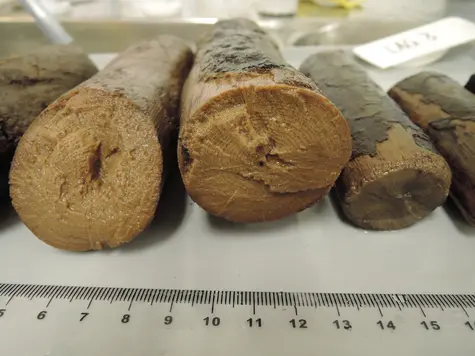
The researchers also wish to investigate how wood decomposes in the cold waters of the Antarctic. Unlike many other marine areas, there are no wood-boring bivalves, which normally contribute to the decomposition of sunken wooden ships. This means that other biological and chemical processes may play a greater role in how the wreck has changed over time.
This knowledge can contribute both to our understanding of marine ecosystems and to the development of methods for preserving underwater cultural heritage wooden structures.
A follow-up to CHAQ2020
The project builds on the Swedish-Argentine research expedition CHAQ2020, which was carried out in 2020 with support from, amongst others, the Swedish Polar Research Secretariat.
During the expedition, historical remains from Otto Nordenskjöld’s Antarctic expedition were documented on Snow Hill Island, Paulet Island, Hope Bay and Seymour Island. Several of these sites have international cultural heritage status within the Antarctic Treaty system.
Digital documentation has produced a comprehensive body of material that makes the expedition sites accessible to researchers and the general public.
The material is presented on the digital research platform ‘ -Built Cultural Heritage in Antarctica – CHAQ2020’ .
The Antarctic survey is a continuation of this work. If the wreck is located, it could provide a previously missing piece of the historical puzzle surrounding the expedition.
As a complementary part of the planned expedition, the researchers may also return to Paulet Island to document and assess the condition of the stone hut and grave associated with the shipwrecked crew’s overwintering in 1903.
A Swedish-Argentine-Ukrainian collaboration
The project is being carried out as part of an international collaboration between researchers at the University of Gothenburg, Argentina’s polar research institute, the Instituto Antártico Argentino (IAA), and Ukraine’s National Antarctic Scientific Centre (NASC).
This collaboration builds on the Swedish-Argentine studies of Antarctica’s cultural heritage within the CHAQ2020 project and is now being expanded through the partnership with Ukraine.
The planned 2027 expedition will be carried out using the Ukrainian research vessel R/V Noosfera. The vessel is operated by the NASC, which is responsible for Ukraine’s national research activities in Antarctica.
The Swedish Polar Research Secretariat is providing infrastructure support within the framework of the Swedish research programme ‘Pulse of the Weddell Sea’. Through the international coordination of research vessels, instruments and scientific expertise, the conditions are being created for investigations in one of the world’s most inaccessible marine environments.
The feasibility of investigating the wreck site depends on ice conditions, weather, available equipment and coordination with other research projects during the expedition.
New knowledge and accessible cultural heritage
The project’s overall aim is to increase knowledge of the Antarctic and its significance for early polar research, as well as to develop methods for the documentation and preservation of marine cultural heritage in Antarctica.
Regardless of whether the wreck is found, the investigations will provide new geographical and historical data on the ship’s final voyage and the seabed in the area in question.
If the wreck is located, the documentation may provide new insights into shipbuilding, the expedition’s material conditions and how cultural heritage remains are preserved in Antarctic waters.
The results may also provide a scientific basis for future assessments of whether the wreck should be granted international cultural heritage protection under the Antarctic Treaty system.
By combining historical research, cultural heritage conservation, digital documentation and marine biology, the project aims to develop new methods for investigating, preserving and making cultural heritage in polar regions accessible.
Collaborating partners
The project is being carried out as a Swedish-Argentine-Ukrainian research collaboration between the University of Gothenburg, the Instituto Antártico Argentino (IAA) and Ukraine’s National Antarctic Scientific Centre (NASC).
The planned expedition will be carried out using the Ukrainian research vessel R/V Noosfera, operated by the NASC.