What will the project study?
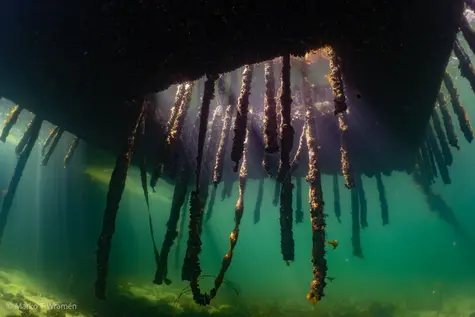
"In the Swedish part, we want to study the environmental effects of community blue gardens. We will look at how the small-scale cultivations affect the local environment and whether they contribute to increased biodiversity in the area. The goal is to develop methods for environmental monitoring."
"Our Danish colleagues will develop business models for both commercial and non-commercial cultivation. Our Finnish colleagues will investigate which species can be cultivated in the low salinity of the Gulf of Bothnia."
Who are your co-operation partners?
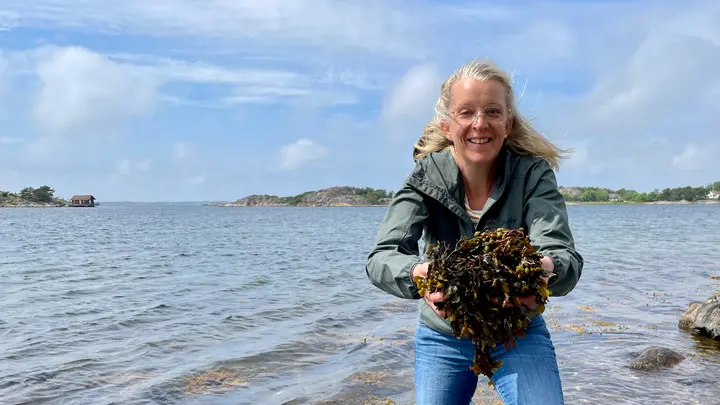
"There are four organisations with different skills and experience involved in this project. Danish Havhøst is an organisation that has been working with blue community gardens for over ten years, and has extensive experience in starting up farms. Aktion Österbotten is a regional organisation in Finland that works with rural development, and Submariner is an organisation that coordinates EU projects with a focus on sustainable use of the sea. At the University of Gothenburg, we will work to support local initiatives that want to invest in small-scale farming."
What do you want to achieve in this project?
"For Sweden, I hope it will be easier to start marine allotments. Overall, the project will lead to better knowledge of how allotments affect our local environment, and we will develop a handbook that will hopefully be used by future marine farmers."
Text: Karl-Johan Nylén
About COOL BLUE project
COOL BLUE (Community Ocean Farms and Local Business Clusters) is a collaborative project to develop the concept of blue community gardens in Sweden, Denmark and Finland. The project runs between 2023 and 2026 and is financed by the funding programme Horizon Europe (10 million SEK). Collaborating partners are Centre for Sea and Society, Gothenburg University (Sweden), Havhøst (Denmark), Aktion Österbotten (Finland) and S.Pro (Germany).