

CHRISTINA BERGER
Dissertation defense: 12 December 2025 (click for details)
Doctoral thesis: Experiences in limb salvage using mega prosthesis
Research area: Orthopaedics
Sahlgrenska Academy, The Institute of Clinical Sciences
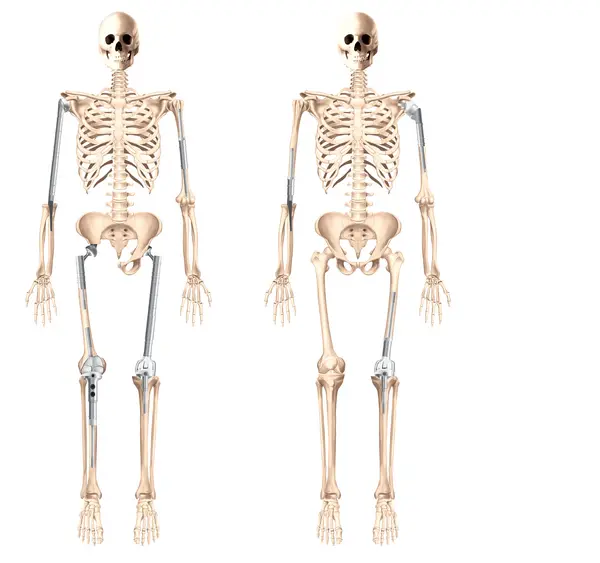
In surgical treatment of bone sarcoma, a larger section of a bone – for example the thighbone or shinbone – is often removed to ensure the tumor can be completely excised. Reconstruction is usually performed with a megaprosthesis – a metal implant that is anchored to the skeleton and replaces the removed section and adjacent joint.
These procedures can result in good function, but the risk of complications is high due to the extensive surgery and the large amount of foreign material implanted.
Complications but good long-term outcomes
Christina Berger has reviewed all patients who underwent megaprosthesis surgery at Sahlgrenska University Hospital over a 15-year period. The number, types, and management of complications were documented, as well as how many patients still had a functioning prosthesis at the end of the follow-up period.
“The most important finding is that most patients still have a prosthesis at the end of the study period, even though more than half experienced one or more complications,” says Christina Berger, senior consultant in orthopaedics at Sahlgrenska University Hospital and doctoral student at the Institute of Clinical Sciences.
In a qualitative interview study, patients emphasized the importance of continuity and trust in their care.
“It matters greatly to them to be treated for complications by the same team that performed the surgery.”

New method for detecting loosening
In the thesis, a new radiological method was evaluated to detect whether the prosthesis stem has detached from the bone.
“The method has proven useful even for megaprostheses,” says Christina Berger.
The results can be used both to inform patients about risks and expected outcomes of megaprosthesis surgery and to improve care in this rare and resource-intensive type of surgery.
What have been the most rewarding and most challenging parts of the doctoral project?
“It has been rewarding to immerse myself in different research methods and to reach conclusions on questions I have carried with me through many years of clinical work. The main challenge has been finding enough time for research while combining it with clinical duties.”
Text: Jakob Lundberg


