Supervisor: Martin Dalin
Co-supervisor: Agnes Dahlstrand Rudin, Karin Mellgren and Fani Pujol Calderón
Opponent: Karen-Lise Garm Spindler, Aarhus Universitet, Danmark
Examining committee: Victoria Rotter Sopasakis, Per Lindahl and Sofie Mohlin
Research area: Pediatrics
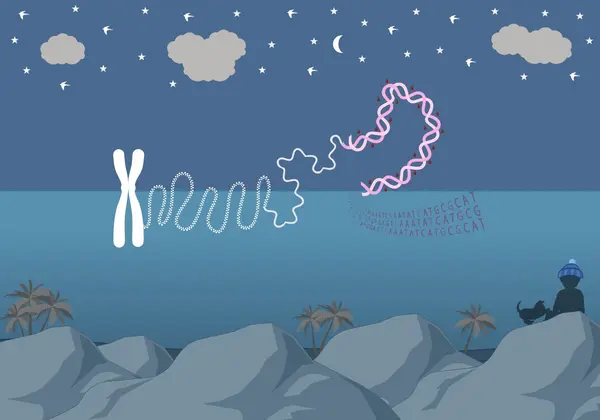
Cancer recurrence is detected earlier using ctDNA analysis as a biomarker
The results in Raghda Ibrahim’s thesis represent a major step forward toward more individualized treatment for childhood cancer—with fewer side effects, reduced radiation, and a better quality of life for the child, and for the family.
Children with cancer often undergo repeated scans, examinations, and sometimes invasive procedures to see how well their treatment works. However, detecting small amounts of remaining cancer or identifying relapse early can still be challenging.
“We need more sensitive and less invasive ways to monitor the disease over time. So, my research explores how a simple blood sample could help us monitor childhood cancer”, says Raghda Ibrahim1, dentist and doctoral student at the Institute of Clinical Sciences.
Tumors release tiny fragments of DNA
Tumors release tiny fragments of DNA into the bloodstream, known as circulating tumor DNA (ctDNA).
“By detecting and tracking these fragments using highly sensitive methods, we hoped to better understand how children respond to treatment and identify signs of disease relapse earlier”.
The aim of this thesis was to evaluate the potential of this DNA (ctDNA) as a clinically useful biomarker in various types of childhood cancers.
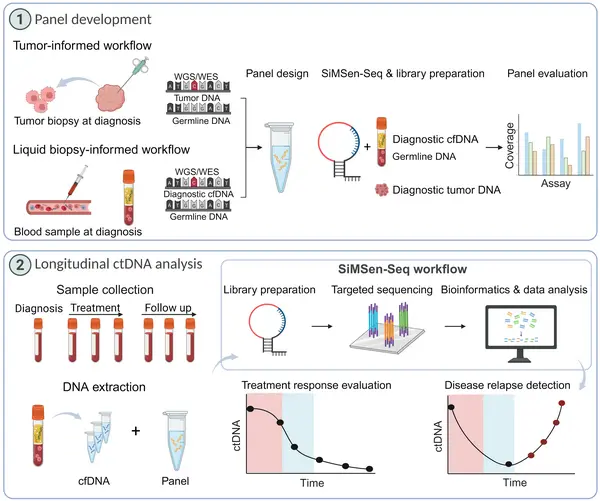
“"We evaluated the adapted ctDNA monitoring strategies in four different childhood malignancies2, including targeted hotspot mutation analysis in neuroblastoma and Langerhans cell histiocytosis, and personalized approaches in lymphoma. In Hodgkin lymphoma, we developed a novel approach directly from blood rather than tumor tissue, allowing us to monitor treatment response using a simple blood sample"”.
Personalized blood tests using each child's tumor mutations
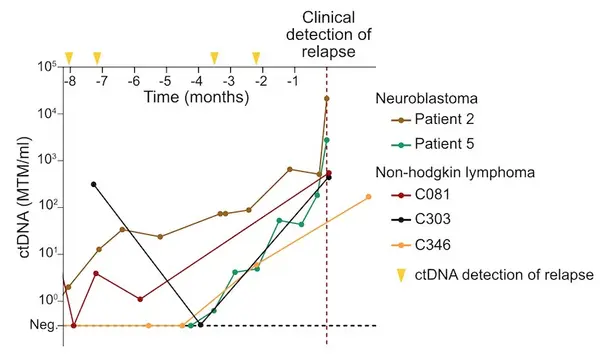
In conclusion, when disease-adapted analytical strategies are applied, analysis of ctDNA may provide clinically important molecular information across childhood malignancies. Rather than replacing current monitoring methods, ctDNA analysis may complement imaging, clinical assessment, and established laboratory biomarkers.
Raghda Ibrahim developed a blood test for ALK (Anaplastic lymphoma kinase) mutations in children with neuroblastoma that is now used clinically in Sweden and has been validated in Europe.
– We also detected signs of lymphoma relapse in blood before clinical relapse. Our lab is already building Pro-CITUP, an ongoing prospective study developing personalized blood tests based on each child's unique tumor mutations. We hope this work will eventually mean fewer scans and invasive procedures, more personalized care, and better quality of life.
Teamwork eased the challenges
What has been the most rewarding and challenging part of your doctoral research?
“I have loved working at the Sahlgrenska Center for Cancer Research. My supervisor, Martin Dalin, has trusted us from day one and always made time to support us, giving us the freedom and resources to grow. I've learned so much from him and our wonderful colleagues and collaborators in Anders Ståhlberg's group; teamwork made even the challenge of detecting tiny amounts of tumor DNA rewarding. I could not have wished for a better supervisor or research environment”!
Text: Susanne Lj Westergren
MORE FACTS
- Raghda Ibrahim:
is from Alexandria, Egypt and finishing here PhD study here. She works in translational childhood cancer research at Sahlgrenska Center for Cancer Research.
- Four different forms of childhood cancer, which appear in the thesis:
Neuroblastoma
Langerhans cell histiocytosis (LCH)
non-Hodgkin lymphoma (NHL)
Hodgkin lymphoma