Supervisor: Khalil Helou
Co-supervisors: Toshima Parris, Anikó Kovács, Pernilla Dahm-Kähler, and Per Karlsson
Opponent: Stefan Enroth, Uppsala University
Examining Committee: Martin Johansson, Cecilia Bull, and Sahar Salihi
Research area: Oncology
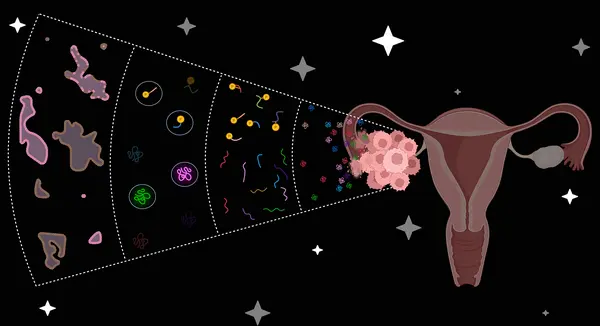
Biomarkers could improve ovarian cancer diagnostics and treatment
Ovarian cancer has five distinct subtypes. Lucas Werner has identified biomarkers that can distinguish between them with high accuracy. In the longer term, this could contribute to more individualized diagnostics and treatment.
Ovarian cancer often has a poor prognosis, partly because symptoms may appear late and diagnostic and treatment options are limited. The subtypes can behave differently, but few tools are available in clinical practice to account for these differences.
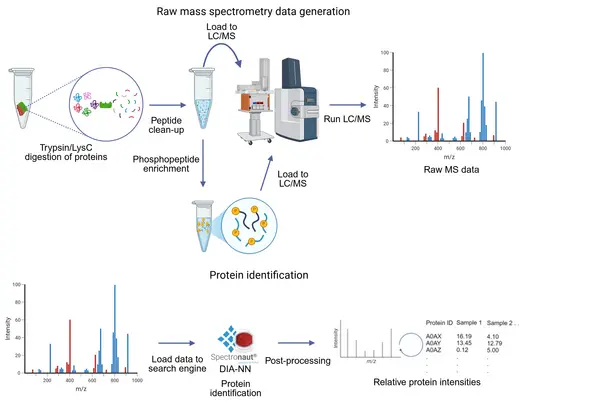
“We have studied protein expression and signaling in tumors to identify patterns associated with the different subtypes,” says Lucas Werner, doctoral student at the Department of Oncology, Institute of Clinical Sciences.
These patterns may serve as biomarkers – biological features that can provide information about a disease.
Five subtypes with different features
Surgery followed by platinum-based chemotherapy has long been the main treatment for ovarian cancer. Other options have since become available, but better tools are still needed to account for the different subtypes of the disease.
“We identified unique biomarkers for each subtype with high accuracy. These include both previously reported biomarkers and entirely new ones.”
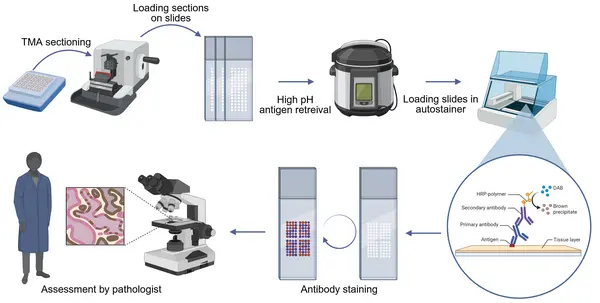
Biomarkers validated
The researchers were also able to confirm the biomarkers using a method already used in pathology, where tissue samples are examined, among other things, to establish diagnoses.
“If supported by further studies, the biomarkers could be used to improve diagnosis and treatment and deepen our understanding of the disease. In the longer term, this could benefit patients’ health and well-being.”
Growing as an independent researcher
What have been the most challenging and the most enjoyable parts of your doctoral project?
“Taking responsibility for my own projects has been challenging, but it has also helped me grow considerably as an independent researcher. Working with patient samples has been a major responsibility, but it has also made the work feel very meaningful,” says Lucas Werner and continues:
“It has been an honor to be part of an environment where people strive, in different ways, to improve patients’ lives.”
Text: Jakob Lundberg