Our research is both broad end deep
From plants to animals
We study a diversity of organisms, both in their natural environments and in the laboratory. This includes anything from microscopical fungi, bacteria and algae via herbs, invertebrates, fish and reptiles to larger trees, birds and mammals. Our research also explores how environmental factors – and especially environmental change – affect living organisms. This includes everything from chemical and physical factors, nutrients, and population density, to climate change and environmental pollutants.
From sea to land
The research spans terrestrial, freshwater, and marine environments. In other words, we study what happens on land, in the air, and in aquatic systems – from lakes and streams to the open ocean. Our work is not limited to species found in Sweden, but covers the entire globe, from the Arctic to the Antarctic, and across the tropics.
From cells to populations
Our projects range from processes inside a single cell, and how individuals of different species are built and function, to the evolutionary relationships among species and the dynamics within and between populations. By studying different levels of biological organization and collaborating across research areas, we gain a more integrated understanding of how organisms function and interact with their environment.
From basic research to application
Many of our research projects are pure basic research, aimed primarily at advancing knowledge in a field. But much of our work also has direct applications. This includes developing sustainable and nutritious food in aquaculture, breeding salt-tolerant crops for cultivation in areas where traditional crops cannot grow, and cultivating microalgae for the production of biofuels or as raw materials needed in various industries.
Collaborations to solve the big challenges
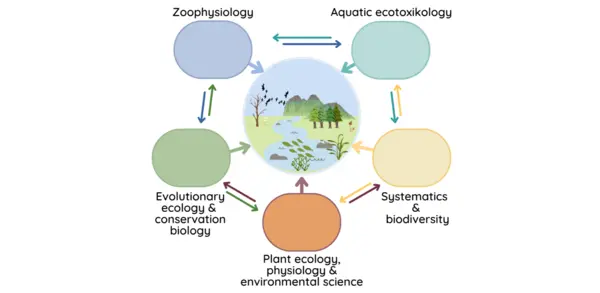
The question we deal with usually originate from classical biology subjects like physiology, cell biology, ecology, evolutionary biology and systematics but also include broader topics like conservation biology and environmental sciences. From that we have identified five main research areas, that covers most of the research done at the department. , Aquatic ecotoxicology, Evolutionary ecology & conservation biology, Systematics & biodiversity, Plant ecology, physiology & environmental science and Zoophysiology. But there are often no sharp boundaries, and to answer complex questions we collaborate both within and between the areas.
Find research groups
Within each area there are several research groups, working with more or less well-defined projects. Many researchers are engaged in several projects, that may cover more than one main research area.
Read more about research groups and projects
Short description of the main areas
Some research areas span over several of the classic subject, but they can also be specializations within a single subject. Here are short descriptions of each one of the areas. Do you want to learn more about the research, please follow the link to the page for the respective area.
Aquatic ecotoxicology

In ecotoxicology one try to explain how toxic compounds affect ecosystems. Focus for the ecotoxicologists at BioEnv is on the aquatic environment and include studies on fish, algae and bacteria. For example, they examine the effects of pesticides, pharmaceutical residues, and microplastics that find their way into the water through various pathways. They also study how different substances interact — is 1+1 more than 2, meaning is the effect of two pollutants occurring simultaneously worse than the sum of each one individually? Many projects also have a clear conservation aspect, involving collaboration with authorities and organizations to produce material for policy documents and legislative proposals, particularly regarding the use of chemicals.
More about aquatic ecotoxicology
Evolutionary ecology & conservation biology
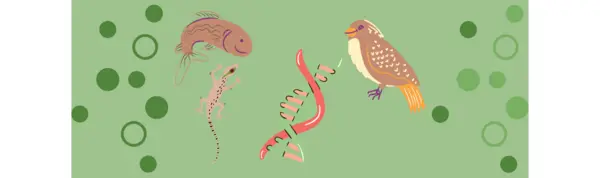
Ecology and nature conservation are closely connected — in order to care for and protect nature, one must (among other things) understand how organisms interact with each other and with their surrounding environment. Many researchers in this field have a foot in both camps. Their questions concern, for example, how non-native and potentially invasive aquatic species affect our native species, such as how brook trout threaten to outcompete brown trout, or how the spread of round goby can be halted. They also address which factors primarily influence how seal populations fluctuate over time. Other questions focus more directly on evolutionary aspects, such as the development of different types of ornaments in fish, reptiles, and birds, and what these traits cost the individual.
Many projects also involve close collaboration with county administrative boards and other authorities to develop guidelines and objectives for the management of natural areas.
More about evolutionary ecology & conservation biology
Systematics & biodiversity

To be able to preserve biological diversity, one must know both the current distribution of different species and how their distributions have looked from a historical perspective, as well as how various species are related and which factors drive evolution. The researchers working in this area at the department combine the collection of new field material with existing databases and large-scale modeling approaches. Their research questions range from how human presence in prehistoric times has affected the occurrence of primarily large terrestrial mammals and birds, to the dispersal patterns of, among others, campion and palms, and the occurrence of truffles in Sweden.
More about systematics & biodiversity
Plant ecology, physiology & environmental science
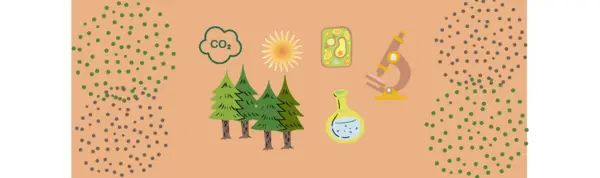
The common denominator for everyone working in this research field is that the focus is on plants and algae, even though the research questions differ quite a lot between projects. Many projects focus on how climate change affects plant ecosystems, both in polar regions and tropical rainforests, and operate at the interface between ecology, physiology, and environmental science. Other projects take a more explicitly physiological approach, studying specific traits of a species at the cellular or molecular level. Even here, there is often a clear applied aspect — for example, developing new, salt-tolerant wheat varieties to enable cultivation in less favorable environments, or using algae to produce various bio-based materials.
More about plant ecology, physiology & environmental science
Zoophysiology
Zoophysiology is about how animals function. At the department focus is in fish and we study questions relating growth and metabolism, but also more specific how the cardiovascular system and gastrointestinal tract is controlled and affected by environmental factors like type of food, or variation in temperature or oxygen. We also work with questions related to sustainable aquaculture and animal welfare.