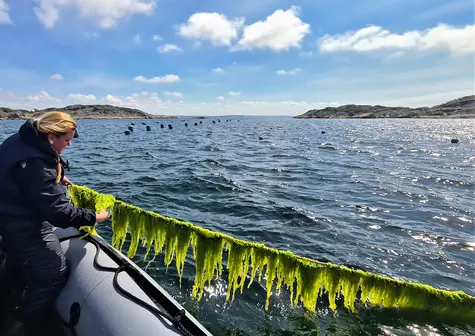
Green seaweeds of the genus Ulva, commonly known as sea lettuces, comprise a variation of globally distributed species that stand out with their unique characteristics. As opportunists, they have a high tolerance towards changing biotic and abiotic factors. Combined with traits such as being able to strongly proliferate under suitable nutrient supply, short reproduction times and thus the fast accretion of biomass, these green seaweeds make suitable aspirants for the steadily rising aquaculture sector. This project investigates the Scandinavian diversity of Ulva species, examines their highly valuable biochemical components and develops environmentally sound cultivation techniques for Scandinavian Ulva species.
More about the project
This interdisciplinary project addresses latest research topics such as the molecular identification of the Scandinavian green algae diversity, improvement of aquaculture techniques for sea lettuce species as well as selective breeding of new culture varieties and high-performing cultivation strains within the genus Ulva. This research supports ongoing conservational projects by providing data of native and invasive species.
Furthermore, we investigate the potential of Scandinavian green algae as a valuable resource for the steadily growing seaweed aquaculture industry in northern Europe.
Molecular identification of species
Green algae of the genus Ulva inhabit marine and brackish water environments and are known for their cosmopolitan distribution. Due to the occurrence of strong phenotypic plasticity within species and the appearance of several cryptic species, it is extremely difficult to taxonomically discriminate entities by morphological characters only.
Considering these difficulties, modern molecular techniques are used for species identification and delimitation within this project. With the application of such modern techniques this project aims to assess the green algae diversity of Scandinavia.
Cultivation and breeding for valuable applications
With its highly valuable compounds, Ulva biomass finds its application for example in the food sector and as feedstock for biomaterials, and also as energy crop.
With the help of manipulative experiments and different aquaculture approaches we investigate various cultivation techniques and their direct effects on the biochemical composition of the algae biomass.
Concomitant with testing optimal cultivation conditions for different Ulva species, the selection of high-performing cultivation strains is a central research topic addressed within this project.