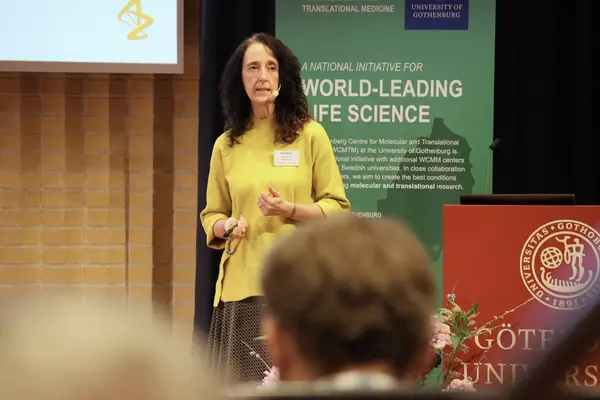
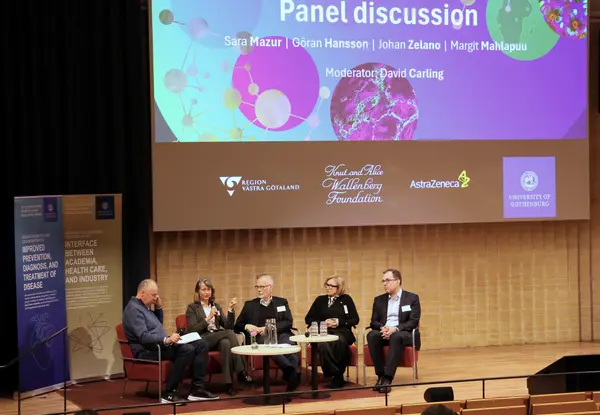
A highlight was the speech by Sara Mazur, Executive Director of Knut and Alice Wallenberg Foundation who among other topics spoke about the road ahead and the future of life science in Sweden.
A meaningful impact
“Life science remains one of the foundation’s top priorities. We firmly believe that by working closely with academy, healthcare regions, and industry, we can make a meaningful impact. WCMTM exemplifies this approach—bringing together key partners, including AstraZeneca and the Västra Götaland Region, to facilitate the clinical application of basic research." Sara Mazur said.
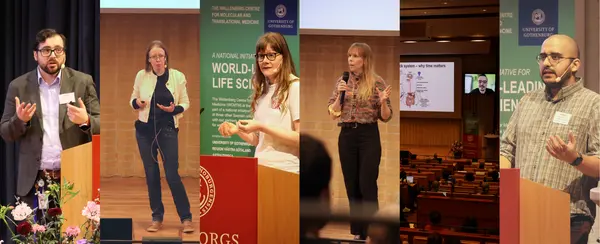
The coming years are full of both promises and challenges for life sciences, with new technologies and AI emerging as major driving forces. And the strong foundation in both research and innovation that is already in place, needs to be further strengthened.
"From the very beginning, our ambition with the Wallenberg research centers has been to create an environment that cultivates competence, fosters knowledge, and develops the next generation of research leaders—both in academia and clinical settings. This vision has been successfully realized, with a national structure now firmly in place through collaboration with centers across Sweden and with SciLifeLab.”
Collaboration a natural ingredient
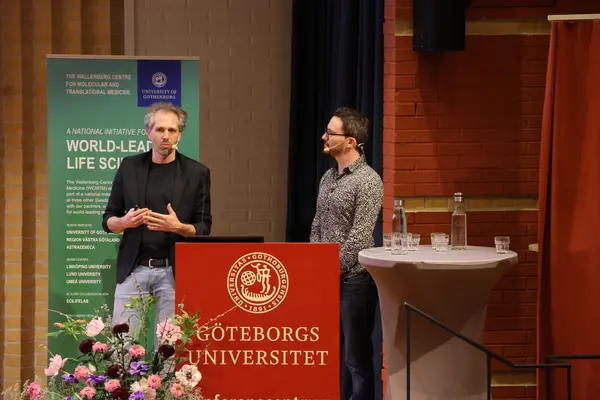
Among others, the director of the centre, Johan Zelano, reflected on the strengths of the molecular, translational and data-driven community in Gothenburg.
“What truly sets our community apart is its deeply translational nature, bringing top international competence to Gothenburg and fostering innovation at the intersection of academy, healthcare and industry. The fact that we also bridge two faculties at the university of Gothenburg is another unique aspect of the centre that brings in collaboration as a natural ingredient.” Johan Zelano said.