
From sea to plate: New species on the menu
Sea lettuce, sea squirts and shore crabs are among the marine species found along Sweden’s west coast that could play a much greater role in our diets. But the biggest challenge is not what the sea has to offer – it is getting these ingredients from the ocean to consumers. This is the finding of a new study from the University of Gothenburg.
Seafood consumption in Sweden is dominated by a small number of species, and around 75 per cent of the seafood consumed is imported. Yet the waters along Sweden’s west coast are home to a wide range of edible seaweeds and marine invertebrates that remain largely underused.
Researchers at the University of Gothenburg assessed 38 species and groups of species to identify those with the greatest potential as future seafood products. Their biological assessment was combined with interviews, surveys and workshops involving fishers, chefs and other stakeholders in the seafood sector.
“We have many marine resources that could be used much more than they are today. But biological suitability alone is not enough. There also need to be viable routes from the sea to restaurants and consumers,” says Susanne Lindegarth, researcher at the Department of Marine Sciences, University of Gothenburg.
Seaweed, squid and crabs among the most promising

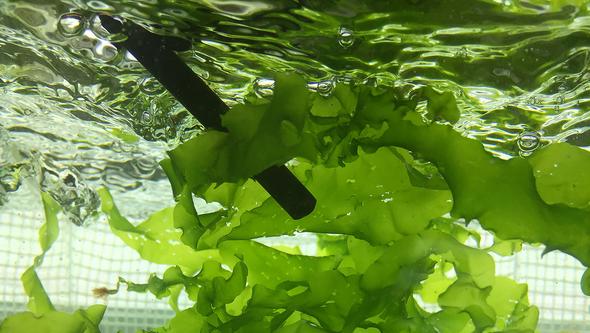
Sea lettuce topped the researchers’ ranking, followed by squid and other cephalopods, and sugar kelp. Sea urchins, sea squirts and shore crabs were also among the most promising candidates.
“Sea lettuce is a green seaweed that is already cultivated in Sweden. There is also considerable interest in it from the culinary sector, which helps explain why it ranks so highly,” says Susanne Lindegarth.
The study shows that the main barriers to diversifying seafood consumption are not biological. Fishers may catch potentially valuable species as bycatch but have no buyers for them, while restaurants need reliable supplies before they can introduce unfamiliar ingredients to their menus. Processing facilities, market access and clear regulations are other crucial factors.
“What is particularly interesting is when biological potential coincides with strong interest from those who would cultivate, catch, process or serve a species. That is when we have the best chance of actually bringing it to people's plates,” says Susanne Lindegarth.
Chefs help turn unfamiliar species into food
Chefs could play a key role in making lesser-known marine species appealing to consumers. Researchers have explored this potential through the Scary Seafood project.
At a workshop held at Restaurant VRÅ in Gothenburg, chef Sofia B Olsson and seven fellow chefs worked alongside researchers to experiment with ingredients including swimming crabs, glass shrimp, sea urchins and sea cucumbers.
The resulting dishes included deep-fried swimming crab legs, sea cucumber ragù and soba noodles with sea urchin.
“We don't need to eat large quantities of every new species. What matters is finding more ways to make use of marine resources while building viable supply chains around them. Chefs, producers and entrepreneurs can all play an important role in this,” says Susanne Lindegarth.
New project aims to bring promising species to market
Several of the challenges identified in the study are now being addressed through Testarena Skagerrak, a Swedish–Norwegian project in which the University of Gothenburg participates through its Tjärnö Marine Laboratory.
The project aims to establish test environments where researchers and businesses can develop sustainable marine aquaculture, new technologies and business models.
At Tjärnö Marine Laboratory, researchers are developing cultivation protocols for species including the green sea urchin and the common whelk. The project will also address business conditions and regulatory frameworks on both sides of the Swedish–Norwegian border.
“We now need to move beyond identifying species with potential and start creating the conditions for actually using them. That requires connecting research, aquaculture, product development and entrepreneurship,” says Susanne Lindegarth.
Scientific publication: Prioritising seafood diversification in Sweden: Integrating biological screening with stakeholder constraints, published in Marine Policy.
Authors: Susanne Lindegarth, Christin Appelqvist and Eva Maria Jernsand, University of Gothenburg.
Text: Karl-Johan Nylén
The scores are based on the researchers’ assessment of each species’ potential as food, taking into account both biological suitability and opportunities for practical use.
1. Sea lettuce (Ulva fenestrata) – 7 points
Can be cultivated and has attracted strong interest from chefs and other stakeholders. The combination of established cultivation methods and a wide range of potential uses makes it particularly promising.
2. Squid and other cephalopods – 6 points
Several species are already caught as bycatch and have clear culinary value. Their potential lies partly in making better use of what is already being caught.
3. Sugar kelp (Saccharina latissima) – 6 points
Well suited to cultivation and has attracted considerable interest from chefs. It can be used in a variety of dishes and processed food products.
4. Green sea urchin (Strongylocentrotus droebachiensis) – 5 points
A sought-after culinary ingredient with potential for aquaculture. Developing cultivation methods could create new opportunities for production.
5. Vase tunicate (Ciona intestinalis) – 5 points
Can be cultivated and has attracted interest from chefs, particularly for its umami flavour. It can be processed and used in products such as broths and minced seafood preparations.

