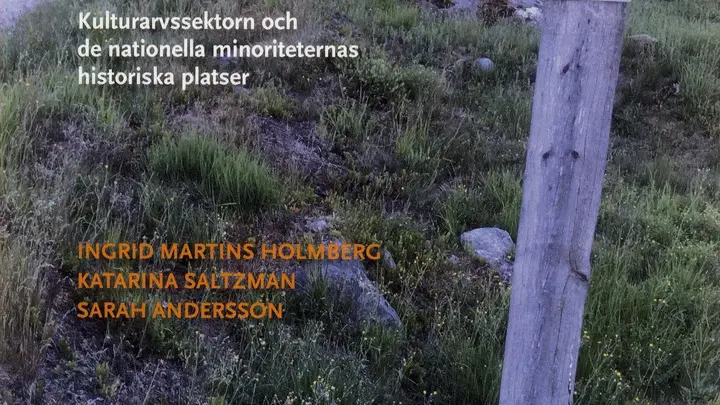
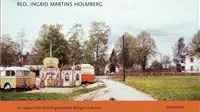
Att ge plats. Kulturarvssektorn och de nationella minoriteternas historiska platser
(2019) eds. I Martins Holmberg & K Saltzman
This book presents the geography of an engagement of the Swedish public Heritage Institutions, in the history of the Swedish National Minority groups. It seeks to understand how purportedly stable and self-contained institutions, such as museums and local heritage government repositories, are re-formed through engagement with subjects and histories outside of the mainstream. The book introduces the Swedish national minority groups (the Sámi, the Tornedalingar, the Jews and the Swede-Finns; the Roma people were focused in a former research project), and how their historical trajectories, respectively, have been acknowledged, cared for or listed. A series of interviews with representatives for each National Minority group reflects the situation. The research indicates a huge difference between how the groups are acknowledged, but also between the level of engagement of the regions. The overall acknowledgement, caring and listing of the places of concern, is far more intensive in the northern regions of Sweden, and far more extensive in the southern. This variation only partially corresponds to the presence of the groups of concern, and must thus be understood in relation to other aspects. While much analysis of heritage institutions hitherto has focused on the institutional legacies of the 19th century, our interpretation instead points at institutional permeability, which means that it is the very act of encounter and engaged knowledge that affects notions of what constitutes ‘heritage’.
The book is in Swedish and is titels Att ge plats. Kulturarvssektorn och de nationella minoriteternas historiska platser, it is avalible at Adlibris.
For an interview about the book in Swedish:
Forskning.se 20190409 "Nationella minoriteter reduceras till symboler"