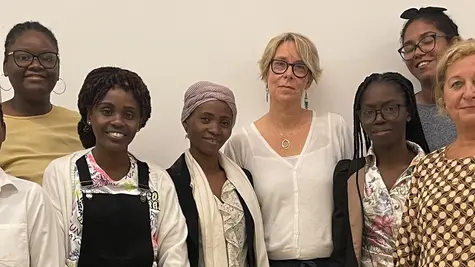
Research team
- Liselott Dellenborg, University of Gothenburg
- Josephine T.V. Greenbrook, University of Gothenburg
- Emma Lundberg
- Mayssa Rekhis, University of Gothenburg
- My Opperdoes, University of Gothenburg
- Zena Salloum Yared, University of Gothenburg
- Lena M. K. Gross, Norsk Institutt for Kulturminneforskning
- Gunilla Backman, extern konsult
Background
The project addresses the significant risks that unaccompanied girls face in relation to their sexual and reproductive health and rights (SRHR) before, during, and after migration. These risks include vulnerability to sexual violence, exploitation, and unmet SRHR needs.
Previous findings from the HERSUM Study highlight the challenges these girls encounter in accessing appropriate SRHR-related healthcare in Sweden. However, less is known about how healthcare institutions themselves understand and respond to these needs. There is therefore a crucial need to identify where shortcomings in healthcare processes arise, how they may contribute to human rights risks, and what kinds of early interventions could help safeguard this group.
Aim
The project aims to identify the points at which risks of SRHR-related rights violations emerge within healthcare encounters involving unaccompanied girls. It further aims to map opportunities for improved support and early intervention and to understand the role of healthcare professionals’ SRHR literacy in shaping these interactions. By coproducing knowledge with unaccompanied girls, healthcare stakeholders, and civil society actors, the project seeks to develop actionable strategies for addressing gaps in care. Ultimately, the project aims to strengthen healthcare practice, inform policy development, and improve SRHR protections for a particularly marginalized group.
Research questions
The project is guided by the following questions:
- What structural or policy level barriers influence unaccompanied girls’ access to SRHR-related healthcare, and how are these reflected in global, regional, and national SRHR policy documents?
- How do healthcare stakeholders and civil society actors perceive and respond to the SRHR needs of unaccompanied girls in practice?
- How can collaborative knowledge production between unaccompanied girls, healthcare actors, and civil society help identify opportunities for early intervention and improved care?
- What concrete strategies and solutions can be developed to strengthen healthcare institutions’ ability to meet unaccompanied girls’ SRHR needs and prevent rightsrelated risks?
Method
The project uses an interdisciplinary, participatory, and multi‑method design, ensuring that the voices of young women who migrated to Sweden as unaccompanied girls shape the research process.
Study 1 – Critical Policy Analysis
This study examines global, regional, and national SRHR policy documents to identify structural barriers that affect the ability of unaccompanied girls to have their SRHR needs met. The study also explores how these policies align—or fail to align—with girls’ lived experiences documented in the HER‑SUM Study.
Study 2 – Participatory Focus Groups
This study uses focus groups with healthcare stakeholders and civil society advocates to explore how these actors understand and address SRHR‑related needs in their practice. Former unaccompanied girls participate by helping define key themes and questions that the focus groups should investigate.
Study 3 – Community Mapping
This study uses a participatory community‑mapping methodology through workshops with unaccompanied girls, healthcare stakeholders, and civil society actors. The aim is to co‑create practical remedies for identified shortcomings and to produce visual maps outlining actionable solutions. Insights from Studies 1 and 2 guide the workshop design.
Through this structured approach, the project integrates scientific and experiential knowledge to develop solutions that are both evidence‑based and contextually grounded. The three‑year project proceeds in phases, with data collection, analysis, and dissemination carried out continuously.