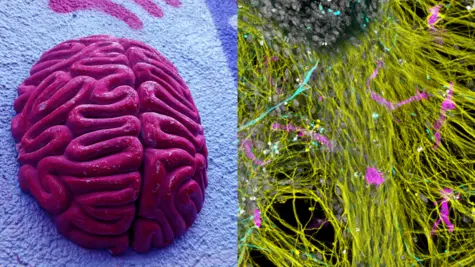
Our laboratory focuses on the development of novel strategies for brain repair and regeneration. We previously showed that reactive astrocytes are key players in stroke, neurodegeneration and disease-triggered neural plasticity responses. By employing innovative technologies, including transgenic models, state-of-the-art imaging technologies, advanced transcriptomics and clinical material, we aim to determine the specific roles of astrocytes in ischemic and hemorrhagic stroke, post-stroke plasticity and in neurodegeneration in order to develop stroke therapies that will enhance brain plasticity and promote functional recovery through the modulation of astrocytes.
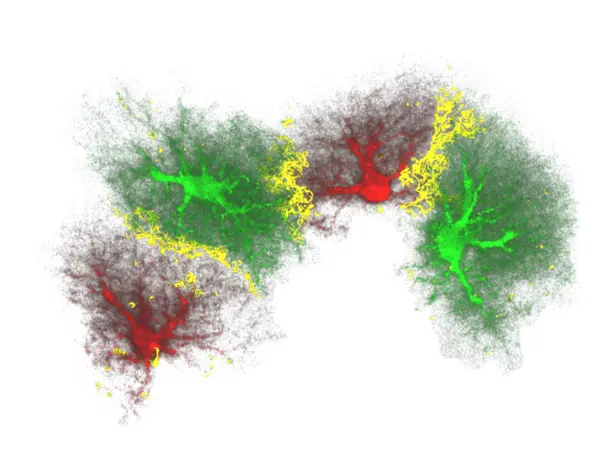
Our laboratory focuses on the development of novel strategies for brain repair and regeneration. We previously showed that reactive astrocytes are key players in stroke, neurodegeneration and disease-triggered neural plasticity responses. By employing innovative technologies, including transgenic models, state-of-the-art imaging technologies, advanced transcriptomics (including single cell gene expression profiling) and clinical material (e.g. blood/plasma/serum/CSF and tissue array biobanks), we aim to determine the specific roles of astrocytes in ischemic and hemorrhagic stroke, post-stroke plasticity and in neurodegeneration in order to develop stroke therapies that will enhance brain plasticity and promote functional recovery through the modulation of astrocytes. We co-coordinate the European Rare disease Consortium ALEXANDER and use patient-derived iPS cell-based systems to develop novel treatment strategies for Alexander disease and other neurodegenerative conditions with maladaptive responses of astrocytes. We use an array of patient material and employ single cell quantitative qPCR and RNAseq technologies to identify disease-specific subpopulations of reactive astrocytes based on their unique molecular signatures, and to determine their functions. Astrocyte responses represent an innovative target for treatment of stroke and other neurological disorders. Identification of blood/CSF/tissue biomarkers of astrocyte activation and repair-promoting microenvironments is expected to provide new diagnostic and prognostic tools to guide therapeutic decisions.
Group members
Principal Investigator:
Milos Pekny, MD, PhD, Professor
Researchers:
Ulrika Wilhelmsson, PhD
Yolanda de Pablo, PhD
Alumni:
Daniel Andersson, Karina Apriko, Meng Chen, Camilla Eliasson, Maryam Faiz, Kerstin Lagervall, Isabell Lebkuechner, Lizhen Li, Andrea Lundqvist, Pavel Marasek, Malgorzata Michalowska, Elin Möllerström, Maria Pedraza, Michelle Porritt, Till Puschmann, Carina Sihlbom, Anders Ståhlberg, Åsa Widestrand och Xiaoyang Yang