Research team
Background and purpose
Vision: To strengthen the health of the ocean and future food preparedness through increased local participation in fair and nature-positive food production.
Goal: To develop a model and best practices for marine allotments that promote ocean literacy and contribute to monitoring the state of the sea.
Starting point: To meet the needs of the future, we must transform our production and consumption systems and deepen our understanding of how people and communities can engage in change.
What we eat and how we produce food greatly affects the planet’s ecosystems. Despite the ocean’s vast biodiversity, only a few marine species are commonly consumed in Sweden — often those that are overfished or environmentally harmful. We have reached a point where it is no longer enough to minimize damage; we need strategies that create positive impact. With 40% of the Earth’s land area already used for food production, the pressure on ecosystems continues to grow.
The project addresses three interconnected crises: the food crisis, the biodiversity crisis, and the climate crisis.
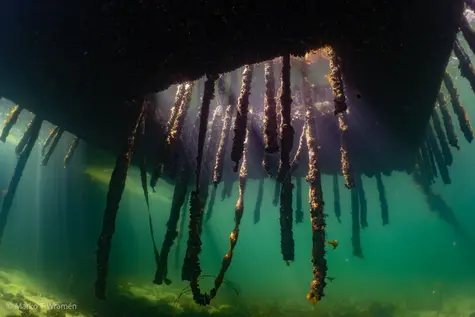
Marine allotments have the potential to support sustainable food production by promoting the cultivation of regenerative species such as mussels, oysters, and seaweed; nutritious foods that require no fertilizers, freshwater, or pesticides.
Research on large-scale commercial mussel farms has shown some local negative effects on the seabed beneath the cultivation areas. However, there is still no research on the environmental effects - positive or negative - of marine allotments, which operate on a much smaller scale, often with multiple species grown together and typically closer to shore.
Research questions and methods
Regenerative aquaculture is an emerging practice that not only focuses on sustainable food production but also aims to actively restore and enhance ecosystems. It works in harmony with the environment by using species and methods that have positive effects on water quality, biodiversity, and ecosystem health.
Despite high expectations, there is still limited understanding of where, how, and for whom regenerative aquaculture should, or can, be practiced and implemented.
This project aims to generate new knowledge by engaging stakeholders across Northern Europe, specifically in Sweden, Denmark, Norway, and Wales, with the following research objectives:
- Mapping how marine allotments are organized, produced, and motivated.
- Developing citizen science methods for environmental monitoring.
- Assessing regenerative effects using citizen science and eDNA.
- Evaluating the potential for collective action.
- Creating guidelines for transformative marine allotments.