“It’s quite a special job, really, because you become both the researcher and the engineer at the same time. Something will go wrong — then you just have to solve it together,” says Wilma Ljungberg.
Wilma Ljungberg is a PhD student at the Department of Marine Sciences at the University of Gothenburg, and this summer she will join a research team heading to Svalbard on board the University of Gothenburg’s research vessel R/V Skagerak.
What we see today as ‘normal’ in the Arctic has already changed
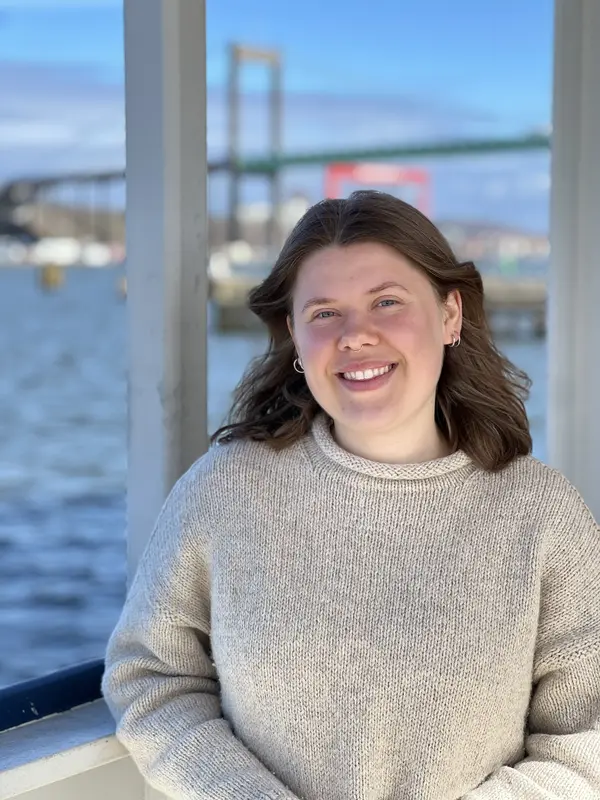
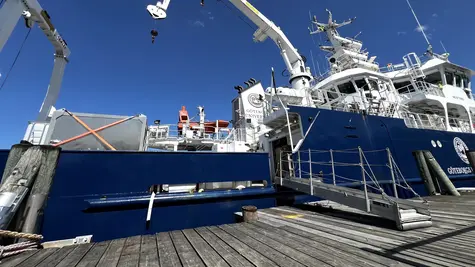
In the latest episode of the podcast Expedition Skagerak, recorded on board the vessel at Nya Varvet in Gothenburg, Wilma talks about life at sea, polar research in the Arctic — and the challenge of preparing for what cannot be predicted.

Wilma Ljungberg’s research focuses on how rapidly melting glaciers affect ocean chemistry and carbon cycling in Arctic fjords — work that involves long days, teamwork, and scientific detective work far from shore.
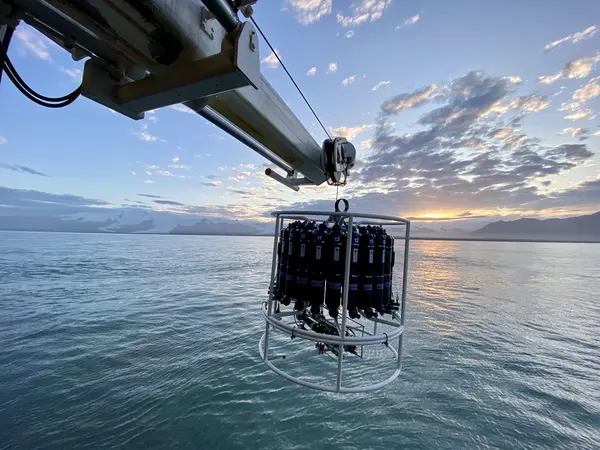
The conversation also explores the reality behind polar expeditions: instruments that stop working, seasickness, sleep deprivation, and the moments when climate change suddenly feels very real.
“What we see today as ‘normal’ in the Arctic has already changed. That’s why it’s crucial that we capture what is happening now — so we can better understand the changes that lie ahead,” says Wilma Ljungberg.
And somewhere between the laboratory, the Arctic fjords, and the drifting ice, one question remains:
How do you prepare for the unexpected?
Listen to the episode Preparing for the Arctic in the podcast Expedition Skagerak.
Spotify – GU Play – Apple Podcasts