
The research school ECOWAR: Examining War as a Long-term Socio-Environmental Process is a collaboration between the School of Global Studies at the University of Gothenburg, the Swedish Defence University and the Lund University Centre for Sustainability Studies (LUCSUS). The research school will be based at the School of Global Studies and will include a total of nine PhD students.
Combining different research fields
ECOWAR brings together political ecology, war studies and sustainability studies. The aim is to develop new theories, methods and knowledge about how war, the environment, power and inequality are interconnected.
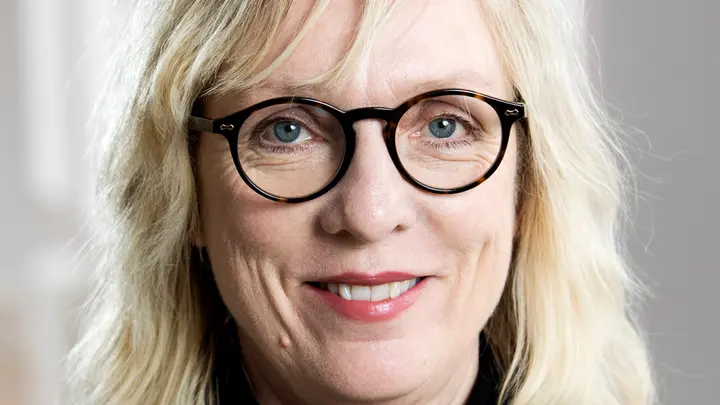
"Although the environmental consequences of war are receiving increasing attention, we still lack a comprehensive understanding of how war, environmental change and governance influence one another over time", says Annica Kronsell, Professor of Environmental Social Science at the School of Global Studies and project leader of ECOWAR.
A new generation of researchers
"Through the research school, we will train a new generation of researchers who can investigate the long-term consequences of war and how these affect different groups in society. Our PhD students will also contribute knowledge that supports more just and sustainable societies, which is particularly relevant in an increasingly militarised world," says Annica Kronsell.
The PhD students' research will be organised around four themes exploring different aspects of the relationships between war, the environment and society.
The first theme examines how war and militarisation reshape institutions and approaches to environmental governance. The second explores how people live with and respond to environmental violence, such as exposure to toxic substances and unexploded ordnance, and how the consequences differ between groups in society.
The third theme focuses on what happens to waste, ruins and war-affected landscapes after war, with particular attention to reconstruction, recycling and preservation. The fourth examines how military preparedness and armed conflict interact with the transition towards a sustainable society.
The research school will also develop new PhD courses that will be open to doctoral students in Sweden and internationally.
"I am particularly looking forward to the collaboration between the universities. Through joint recruitment, supervision and courses, we want to develop an interdisciplinary culture of doctoral supervision. We will also organise a seminar series and annual workshops at the participating universities. This will give us the opportunity to learn more about each other's research environments and develop a shared understanding of the issues we study that goes beyond the individual doctoral theses," says Annica Kronsell.