On 22-24 April 2026, the Swedish Anthropological Association (SANT) held its annual conference at the School of Global Studies. This year’s theme was: Interventions.
Theme: Interventions
In the world around us, interventions take place in all spheres of life and at every imaginable scale. They may be grand or modest, deliberate or accidental, transformative or destructive. A government policy, a medical treatment, a social movement, an artistic act, a conversation, or the presence of an anthropologist in the field or the lecture room: all may be understood as interventions. They share a common desire to make change, to redirect the flow of life and meaning. Yet the outcomes of interventions are never fully predictable. They may generate care, curiosity, and connection, or provoke resistance, refusal, and rupture. Interventions always act in the space in-between people, institutions, ideas, and possible futures.
Anthropology studies interventions, their rationale, effects and responses. Often, anthropology positions itself in critique, resisting or exposing the consequences of intervention, or exploring what it might mean to hold back, to refrain, to not act. Moreover, anthropology has always been bound up with intervention. Doing anthropology is never neutral: the presence of an anthropologist alters the relations, stories, and meanings that come into view. Through writing, teaching, and collaboration, anthropologists participate in how others think and act. Sometimes this is deliberate, a choice to use knowledge as engagement, at other times, intervention occurs unexpectedly, through relationships that pull us into new responsibilities. Increasingly, anthropology is urged to intervene. Climate crisis, injustice, and displacement call for more than being observers, but risks replicating the power dynamics we critique. What might responsible, yet critical, anthropological interventions, in research, teaching, and public engagement, look like?
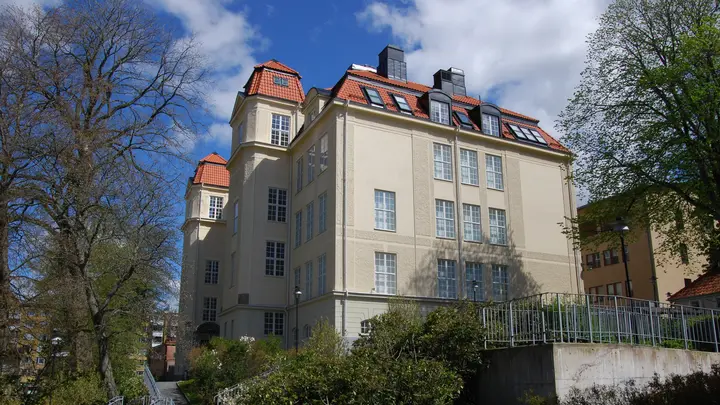
The conference was be 22-24 April 2026 at Annedalseminariet (Seminariegatan 1A) and Linnésalen (Seminariegatan 1B), which are located at Campus Linné in Gothenburg.
See building 1A and 1B in the picture below:
Map of Campus Linné.
Conference dinner
The conference dinner was held at Restaurant Simba at 19:30, Thursday 23 April.
In world politics, the year 2026 began with Trump's proclaimed "non-interventionism" – a supposed pillar of his political platform – being shattered with the intervention in Venezuela, revealing once again how rhetorics of non-intervention often mask the hidden intentions of acute involvement. This paradox extends far beyond global politics. Across multiple domains of human existence, claims of non-intervention function as smokescreens that render hide away active forms of governance, shaping, and control.
Consider for instance: central banks conducting "market operations" while claiming markets self-regulate; museum conservators working under the fiction of non-modification while actively stabilizing artifacts; cosmetic surgeons creating "natural-looking" results through intensive intervention; platform companies claiming algorithmic neutrality while curating content; rewilding projects requiring extensive human management to produce "wilderness"; or Montessori pedagogies that "follow the child" while meticulously re-designing their educational environment.
These are but a few examples. This panel invites ethnographic cases examining how non-intervention functions as rhetoric across diverse settings. How are fictions of non-intervention maintained and naturalized? What work do they perform – politically, economically, morally? Who benefits from obscuring intervention as autonomy, nature, or neutrality? How do people perceive, resist, or reproduce these fictions in everyday practice?
By thinking anthropologically across domains, we aim to take non-interventionism as an analytic category and reveal the complex intents and power relations embedded in claims to "let things be."
Organizers: Anders Norge Uppsala Universitet; Aarhus Universitet
Anton Runesson Uppsala Universitet
Introduced by Alan Strathern and further developed by Marshall Sahlins, immanentism has emerged as a powerful theoretical intervention for rethinking religion, politics, and power. It theorises worlds in which force does not derive from transcendent otherworlds but is immanent in bodies, objects, landscapes, and circulations. Rather than separating the divine from the human, or meaning from matter, immanentism foregrounds continuity, relation, and material presence.
Building on the contrast between transcendentalism and immanentism, this panel brings together ethnographic and historical perspectives from different regions. We ask: How do ritual objects, shrines, or medicines embody divine force? How is cosmic vitality conceptualised as a substance that permeates persons, environments, and social relations? When is political legitimacy articulated through figures understood as bearers of immanent power? And how does immanentism continue to shape practices and institutions even within traditions that frame themselves as transcendental?
The panel proposes immanentism as a theoretical intervention that unsettles enduring dichotomies between human and divine, nature and culture, matter and meaning. We invite contributions that explore how immanent force is theorised, enacted, materialised, and contested across different settings. Combining concise presentations with collective conceptual discussion, the panel aims to develop immanentism as a comparative concept and as a generative horizon for future anthropological work.
Organizers: Ivana Maček Stockholm University
Gabriel Lennon Stockholm University
Ecologies are spaces of dense entanglements, with endless interference in others’ lives, clouding questions of violence and care, indifference and interest. In these messy spots of relationality, how can intervention be navigated? Which non-humans are saved and savable, and which are killed and killable, and how? In the Anthropocenic context of climate change and mass extinction, flora and fauna are subjects of increasingly granular governance as people respond to risks – real and perceived – to valued socio-ecological worlds. Responding to the vexed issues of invasive species, disease, and human wild-life conflicts involves lethal interventions such as eradication, culls, and biological control, which stretch beyond ‘exceptional’ spaces of nature in reserves and parks and into the ‘ordinary’ spaces of cities, harbours, and homes, engaging publics and professionals alike.
This panel seeks to explore these mortal interventions in more-than-human worlds, following Haraway’s injunction “to learn to live responsibly within the multiplicitous necessity and labor of killing” (2008: 80). While environmental challenges mount, there is no innocent way to comport ourselves toward these questions: to refrain can be to consign species to deaths ‘we’ have perhaps unwittingly orchestrated, and to intervene involves the ever-fraught dilemmas of doling out death, with uncertain outcomes.
We invite papers that ethnographically consider the quandaries of mortal intervention amidst entanglement, from the maintaining the borders of food production, to conservationists’ attempts to stave off ecological change, and other efforts toward cutting complicated relational knots; papers exploring ambiguities in modes of killing in the Anthropocene.
Organizers: Lovisa Prage is a comic artist graduated from Malmö School of Comic Art and holds a bachelor’s degree in social anthropology from Lund University. Mail: lovisa.prage@gmail.com
Marie Tillman is a comic artist, published in newspapers and magazines, who has released several graphic novels with different publishers. She holds a master’s degree in social anthropology from Lund University. Mail: marie.tillman@gmail.com
The interest in visual storytelling has grown within research in recent years and comics are upheld as a possibility to convey knowledge in a way that text alone cannot. Drawing images and comics makes us consider details that we might have missed otherwise, lets us portray individuals’ relationship to their environment and visualize time and pace in new ways. Comics within research are often presented as an effective tool for research communication, focused on its informative and pedagogical strengths when showing results. However, we would like to discuss comics as a methodological tool within ethnography.
We are two comic artists working with a project about comics as a method to understand conceptions of and the relationship to nature. We want to explore the meeting between comics and anthropology and discuss what the artistic elements in comics can give during observations and interviews, and its challenges. For example, in what ways can drawing during an interview, and discussing the drawings, provide understanding that would not have been possible otherwise? What could anthropological comics do beyond describing text-based information, when comics are freed from the need to be realistically descriptive, and when its artistic elements are given more space?
We will begin by presenting our project, followed by a roundtable discussion in order to get new perspectives on the unique traits of comics as a narrative method in ethnographic research. We welcome participants who would like to discuss using art based methods in ethnography, to submit a short description of your experiences, perspectives or approaches you would like to bring to the roundtable.
Organizers: Mirko Pasquini Assistant Professor, School of Global Studies, University of Gothenburg mirko.pasquini@gu.se
Lisen Dellenborg Senior Lecturer, School of Global Studies, University of Gothenburg lisen.dellenborg@gu.se
Care work is often framed as an unequivocal moral good, grounded in attentiveness and responsibility to others’ needs. At the same time, care may perpetuate power relations and structural inequalities, including who defines needs, allocates resources and bears the risks associated with intervention. Care, in this sense, emerges as deeply ambivalent: it can alleviate suffering while simultaneously generating harm, reinforcing social control, or entrenching vulnerability along axes of class, gender, race, disability, and age.
Inspired by anthropological and interdisciplinary scholarship on care, this panel interrogates how care simultaneously operates as a site of ethical commitment and political intervention. Rather than treating care as a stable or self-evident pursuit of the good, the panel foregrounds care in practice: as negotiated, improvised and contested within uneven social, institutional and political landscapes. The panel also has an interest in how “good care” is produced through ongoing tinkering (Mol et al., 2010), which involves situated adjustments that recalibrate medical and other caring knowledge, professional norms and boundaries, and care technologies to local conditions of suffering.
Through ethnographic and theoretical contributions, the panel explores care as a form of intervention within and beyond health and healthcare contexts. By attending to moments where care fails, unsettles, or conflicts with its own ethical aspirations, the panel seeks to move beyond celebratory accounts of care work. It highlights the duality of care as both a necessary relational practice and a politically charged process shaped by institutional constraints, moral economies, policy and asymmetrical power relations.
Organizers: Ella Hillström PhD Student, Stockholm University
Zarreen Kamalie PhD Student, Stockholm University
Although the outcomes of most interventions are unpredictable, one of the most predictable elements is that failure is likely. In this panel, we seek to explore the murky underbelly of intervention - failure - and its role in the production of expertise.
Interventions are entangled with the production of expertise, standardization and de-facto expert knowledge which enables the scalability and transportation of interventions regardless of socio-political and geographic context. Failure too is in intimate relationship with this assemblage. For although interventions often do not achieve what they intend, their failures nevertheless serve something else (Ferguson, 1990). Following Ferguson’s reading of Foucault (1979), this panel dwells with failure and those who fail by asking: who and what are served by failed interventions? What forms of expertise emerge from them? And what modes of depoliticization are sustained through the naturalization of failure?
In doing so, we attend to the uneven geographic and socioeconomic distribution of failure, raising questions about the privilege and risk involved in failure. We also ask how anthropologists conduct ethnographic inquiry as witnesses to failure, or how anthropologists deal with their own disciplinary and methodological failures. How do we take our own failures seriously and allow them to inform future praxis?
We welcome contributions from a wide range of fieldsites including, but not limited to, development and policy, health and medicine, scientific and technological innovation, migration and related domains.
This panel invites reflections by anthropologists who have experienced different forms of policy intervention, from multidisciplinary preparation of policy briefs to the articulation of “policy relevant” recommendations. It probes the practical crafting, as well as the epistemic consequences of policy interventions, for individual scholars and the discipline at large. The panel focuses particularly on the writing of “policy briefs”, in short, well-structured and easy-to-read publications. Does policy intervention realize the usefulness of anthropological knowledge? Or does it dilute the complexity of ethnographically grounded insights, simplifying rather than clarifying the (un)known? How can anthropologists juggle the power relations involved, not least to balance academic and political requirements, while safeguarding scholarly ethics? While applauding anthropological efforts to engage with society, this panel seeks to analyze current forms of policy intervention, while seeking to identify what relevant and responsible roles anthropologists can play.
Organizer: Proshant Chakraborty, PhD University Assistant (Postdoc) in Technosciences, Materiality, and Digital Cultures, Department of Science and Technology Studies, University of Vienna proshant.k.chakraborty@gmail.com
As algorithmic models increasingly intervene in human creative, cognitive, and social encounters—from good music recommendations or degenerative AI slop, to our students and participants using GenAI (generative artificial intelligence) tools—how might ethnographers reassert and reappraise socializing and relational modes of scholarly (re)production (see, Sanjek 2014; Willis 2000)? Furthermore, how can we ethnographically intervene toward—or, perhaps, against—such algorithmic encroachments, whilst attending to both social and technical dimensions of the algorithmic moment (Sadowski 2025; Seaver 2022)?
This panel invites ethnographic interventions on, about, and against, how algorithms like GenAI tools intervene in the domain of everyday life. In particular, this panel encourages contributors to experiment with a techno-graphic genre of representation, that is, use technical, ethnographic, auto/biographic registers to discuss human-technology/society-tech relations (see Maguire & Winthereik 2022; Vauhini 2025; Sadowski 2025). Inspired by Ursula K. Le Guin’s (1983) essay on Utopian thinking, where she intends to put a pig on the tracks of capitalism’s one-way growth narratives, this panel asks contributors’ interventions to engage with the following questions.
First, reckoning with the fact that ethnographic engagements have always entailed some form of human-technology relations, how do algorithmic logics intervene in these domains, and to what effects? Second, drawing on our commitment to both cultural critique and representation, how might our interventions problematize extractive logics that undergird the development of algorithms? And finally, reflecting on the structural inequalities and violence of this contemporary moment—much of which is facilitated by, and facilitates, algorithmic interventions—what might the nature of our ethnographic interventions be—or ought to be?
Works cited Le Guin, Ursula K. 1983. “A Non-Euclidean View of California as a Cold Place to Be.” The Yale Review. Maguire, James, and Brit Ross Winthereik, eds. 2022. Reclaiming Technology: A Poetic-Scientific Vocabulary. Ctrl+Alt+Delete Books. Sadowski, Jathan. 2025. The Mechanic and the Luddite: A Ruthless Criticism of Capitalism and Technology. University of California Press. Sanjek, Roger. 2014. Ethnography in Today’s World: Color Full Before Color Blind. University of Pennsylvania Press. Seaver, Nick. 2022. Computing Taste: Algorithms and the Makers of Music Recommendation. University of Chicago Press. Vara, Vauhini. 2025. Searches: Selfhood in the Digital Age. Harper Collins. Willis, Paul. 2000. The Ethnographic Imagination. Polity Press.
Organizers: Anna Louise Skovgaard Interacting Minds Centre and University Clinic for Interdisciplinary Orthopedic Pathways, Department of Clinical Medicine, Aarhus University
Stephanie Ellison Department of Anthropology and Interacting Minds Centre, Department of Clinical Medicine, Aarhus University
Mette Terp Høybye Interacting Minds Centre and University Clinic for Interdisciplinary Orthopedic Pathways, Department of Clinical Medicine, Aarhus University
Uncertainty is a constitutive feature of medical interventions. Clinicians, patients, and institutions routinely make consequential decisions in contexts where evidence is incomplete, prognoses are unstable, and outcomes remain indeterminate (Fox 1957; Han et al. 2011). This panel brings together researchers to examine how uncertainty is recognized, managed, negotiated, and sometimes strategically obscured in decision-making across diverse medical settings.
The panel views decision-making as a social, moral, and institutional process rather than a purely technical or cognitive one (Mol 2008; Street 2014). We invite papers that explore how uncertainty is unevenly distributed across actors; how professional authority, clinical guidelines, algorithms, and risk metrics shape decisions (Adams, Murphy & Clarke 2009); and how patients and families live with, resist, or reinterpret medical indeterminacy (Whyte 2009).
Key questions include: How do clinicians, patients and families translate, balance and negotiate different types of knowledge when making decisions about health? How do institutional demands for accountability interact with uncertainty in everyday practice and clinical encounters? In what ways do social structures shape whose uncertainty counts and whose decisions are legitimized? How do emerging technologies reconfigure responsibility, trust, and doubt in medicine?
Researchers are invited to submit empirically grounded papers that engage ethnographically with the everyday practices of navigating indeterminacy, as well as papers that critically examine how power, inequality, and accountability shape decisions in medical encounters under conditions of uncertainty. Collectively, the panel aims to foster comparative and theoretically generative discussions that advance anthropological and interdisciplinary understandings of uncertainty and decision-making in contemporary medicine.
Organizer: Benedict Singleton Senior Lecturer, Department of Social and Psychological Studies, Karlstad University Benedict.singleton@kau.se
Values and valuation are integral to anthropology, as all aspects of human society and culture are informed by value orderings and conflicts. In this panel, presenters explore processes of valuation and efforts to intervene in contests over value from a variety of perspectives. Our focus is not simply on monetary value; we are interested in varied valuation systems and their contestation broadly. These processes and conflicts are omnipresent within and integral to enactments of society. Value is not simply binary, and these panel presentations focus upon how diverse social and cultural practices enact objects of different natures along with forms of social organisation. We present diverse global studies ranging from seafood in Sweden and Italy, to Nepalese kinship obligations, to regimes of value within anthropology itself and more. We thus explore how multiple, intersecting “games” of value are contested and coproduced with cultural orderings of society itself.
The inspiration for this panel comes from the recent completion of an edited book, All That Glitters is Not Garbage. Adventures in Rubbish Theory. This book draws upon the work of and features a contribution by the social anthropologist Michael Thompson. Several of the panel presentations draw upon his seminal text Rubbish Theory. The Creation and Destruction of Value. Thompson passed away 17 March 2026, and we will take the opportunity to briefly reflect on his life and work.
This panel is closed for proposals.
Organizers: Annika Lindberg University of Gothenburg
Mikela Lundahl Hero University of Gothenburg
The 7th of October 2023 marked a new era for the ‘Palestine question’ and new controversies over the language with which it is described, analyzed, and acted upon. In this era, the term ‘genocide’ has been used not to prevent Israeli atrocities in Gaza, but to silence those who protest it; ‘neutrality’ and ‘complexity’ have been used as discursive strategies to refrain from intervening or condemning violence against Palestinians; and interventions and speech acts – protest slogans, boycotts, and direct actions – aimed at challenging such, in action have been criminalized or classified as terrorism. At the same time, Palestinian theorists and writers have drawn attention to the limits of language to convey the suffering of a dismembered society to a world that does not recognize their humanity. These hesitations and refusals generate knowledge on the power and contested nature of language itself.
In this roundtable, participants are invited to reflect on speaking of and from Palestine as forms of intervention – into politics, at our universities, in public debate, and everyday life. The roundtable focuses on the language that has evolved around Palestine as both a site of (non)intervention and as a magnifying glass that sheds light on dominant power structures and emergent contestations. The roundtable asks, how is language reconfigured in times of mass atrocities? What words are mobilized to justify inaction (e.g. ‘loyalty’, ‘freedom’ ‘work environment’), and with what consequences? What silences constitute a form of intervention (e.g. boycotts, refusals to narrate suffering)?
Organizers: Rachel Runesson University of Gothenburg
Anna Bohlin University of Gothenburg
Interventions, or lack of interventions, are entangled with time in diverse ways. From communities dealing with long-lived toxic matter, entrenched inequalities or colonial legacies, to the politics of imaginations of high-tech AI futures, urban development visions or continuations of inherited patterns of consumerism, time and temporality play a critical role in how interventions are conceptualised, expressed and experienced.
This session welcomes submissions on the multitude of ways in which interventions intersect with time, both when considering the impact of past interventions, and how interventions are expressed, imagined or called for today. How do deep time perspectives, or different perceptions of time, create possibilities for active change (or not), for example in questions of climate action, political change, or technological advancement? How does the temporality of things come to matter as humans attempt to intervene upon/with them in hopes of creating a more sustainable future? How do time restrictions (in fieldwork, during projects, or in the office) shape both the kinds of interventions that are practiced, and how these play out (or don’t)? How do gendered experiences of time shape possibilities for, or experiences of, interventions on an individual and societal scale? What is the role of time in non-intervention, or in endless waiting for interventions to take effect in political, bureaucratic or administrative contexts? How are interventions related to imaginations of possible futures, or reproductions/refusals of real or imagined pasts? These are questions we invite submissions to explore, be it through ethnographic examples, personal fieldwork experiences, or theoretical contributions.
This roundtable invites participants to share and reflect upon best practices and standards in designing and teaching courses in applied anthropology. The promise of applied anthropology has been to use ethnographic methods to engage with real-world problems beyond the often parochial concerns of academia, often in collaboration with interested partners outside the university. A key issue in this process is developing projects with partners that are feasible and valuable for all engaged parties. Another challenge is that ethnographic methods are not easily standardized but rather take shape through particular processes and contexts. Finally, with the rise of big data, algorithms, and AI it has become increasingly obvious that the problems that applied anthropology ideally engage with are not easily approached through a strict ethnographic approach. In other words, in applied anthropology there are challenges connected to design, pedagogy, and methodology that are critical to engage with directly when training students who seek careers beyond academia where their anthropological skills will be useful and valued. We invite participants to engage with these issue by offering examples of how they have developed strategies in their own teaching and practices.
Organizers: Staffan Appelgren School of Global Studies, University of Gothenburg staffan.appelgren@gu.se
Anna Bohlin School of Global Studies, University of Gothenburg anna.bohlin@gu.se
The aim of this panel is to foreground ethnographic approaches to the study of homes through posthuman, new materialist and more-than-human perspectives. There is a long history of anthropological engagement in domestic spaces as sites of everyday practice and intimacy, whether in terms of sustenance and care, or of discomfort or violence. Yet much of what takes place in homes remains analytically underexplored, rendered, mundane or beyond articulation. Orientations toward materialist and more-than-human concerns call for renewed methodological attention to homes as gatherings of humans, non-human beings, things and substances that jointly create domestic livability, but also intervene in it. We wish to explore how ethnographic methods can be developed, modified or adapted to make such entanglements analytically reachable. What does it mean to conduct participant observation, or sensory ethnography, when subjectivity and agency is spread across possessions, furniture, plants, pets and pests –microbes, mould and dust? How can we in our ethnographic practice apprehend and trace relations that are often silent, tacit, imperceptible or affective? What are the methodological constraints of human-centered techniques of capturing more-than-human co-existence and interventions?
We welcome papers that explore methodological possibilities and challenges in researching more-than-human homes ethnographically; for example, contributions that reflect on strategies for noticing, engaging with and conveying non-human presence in ethnographic analysis; or presentations that dwell on issues like sensory attentiveness, material following and reflexive accounts of methodological failure.
Organizer: Kathryn Marie Hudson Animal Studies Discipline, Eckerd College Department of Anthropology, University at Buffalo hudsonkm@eckerd.edu
This panel critically and contextually explores how anthropological interventions (re)shape understandings of and engagements with more-than-human worlds in ways that affect both humans and other-than-human species. Despite its subject matter, anthropological work is rarely limited to strictly human spaces and places. Examinations of its multispecies dimensions, dynamics, and motivations thus allow for more nuanced considerations of the meanings, motivations, and consequences of interventions in academic and applied anthropology. It also facilitates recognition of the diverse forms these interventions can take – including conservation efforts; sustainability work; ethnographic research and documentation; development initiatives; activism; pedagogical practice; and academic writing – as well as increased awareness of their ethical, political, and affective dimensions. This panel invites papers that explore these issues through considerations of the interspecific dimensions of anthropological interventions, their corresponding ethnographic consequences/effects on human communities, and related issues. Theoretical, methodological, and case study or field-based papers are welcome.
Organizer: Alexandrine Boudreault-Fournier University of Victoria alexbf@uvic.ca
This panel examines the concept of pressure as a set of physical, biological, and social forces and tensions that shape bodies, provoke movement, and generate ideas. Pressure operates across multiple forms of interventions, from political pressure to hypertension, encompassing both material and affective dimensions of life. Often associated with negative forces that weigh on individuals, heightening stress and anxiety in a rapidly changing world, pressure can also evoke coercive dynamics that compel people to act in particular ways, calling to mind colonialism, extractive policies, deforestation, forced migration, precarious forms of labour and various mechanisms of domination. While pressure is frequently understood as a top-down force that produces tension or anxiety, this panel proposes to approach it from the bottom up intersubjectively and intra-psychically. People do not merely endure pressure; they may actively mobilize and leverage it to pursue their own aims. As Anand (2011) demonstrates, for example, settlers in Mumbai strategically engage state bureaucracies through “microspheres of negotiation” to secure access to household water. These practices enable residents to inhabit and lay claim to the city; pressure becomes a means of acquiring a form of “hydraulic citizenship,” Anand argues (ibid.). By thinking through pressure, this panel seeks to explore how this concept can generate novel approaches to crises, migration, anxiety, and other forms of intervention across different kinds of bodies and environments. We invite participants to consider the following questions: How does pressure enable new ways of understanding social phenomena? What can attention to pressure reveal about how people cope with, negotiate, and creatively respond to voluntary or involuntary tensions in their everyday lives?
We welcome papers that would explore various emic notions of pressure.
Reference: Anand, Nikhil. 2011 “PRESSURE: The PoliTechnics of Water Supply in Mumbai.” Cultural Anthropology 26(4):511-706.
The panel is dedicated to master’s students and their research papers. They will be welcome to present their ongoing research, a chapter from their thesis, fieldwork or other important work conducted by them within the anthropological field. The participants are encouraged to present their papers with a connection to the theme of the conference ‘Interventions’; however, it is not a requirement to strictly relate to it.
Examples of ethnographic research included in the panel are: grey divorce and evolving family dynamics, religion and secular norms in Sweden, perceptions of climate change, thoughts on artificial intelligence, and parenting and migration among immigrant communities. All of the above-mentioned examples of papers examine social changes in a dynamic world and their broader connections to anthropological studies, despite the differences of their topics. The students’ anthropological knowledge and practices shed light on contemporary societal concerns as well as the educational formation. One of the purposes of education is to create knowledge of use for society, which makes it important for them to participate and share their current works. The panel will create a place to exchange knowledge, networking, practice discussion and defence. This demonstrates how master's research can contribute to larger anthropological discussions while providing critical and grounded insights into current issues.
The students welcome everyone to participate in the master’s panel, to listen or present.
Organziers: Ivana Macek, Anna Sjövall and Anna Bohlin (moderator).
What happens when research is transformed into a play? How does anthropological knowledge function on a stage? Listen to a conversation between Ivana Macek, anthropologist at Stockholm University, and Anna Sjövall, director and artistic director at Teater Halland, about their collaboration on the play The Cashier’s Forgotten Flowers (Kassörskans glömda blommor), which premieres in April. The conversation touches on their experience of working together, the interests and logics that guide research and theatre respectively, what can be done with a play that cannot be done within academia, and the potential of this “intervention” to reach out into society.
Note! This panel is held in Swedish.
Key Note speaker - Marianna Keisalo
Marianna Keisalo is a university lecturer and docent in Social and Cultural Anthropology at the University of Helsinki, where she received her PhD in 2011. She has also worked as a post-doctoral fellow at Aarhus University. Her research is focused on performance, semiotics, and humor. She has done ethnographic research on ritual clowning with the Yaquis, an indigenous group in Northern Mexico and stand-up comedians in Finland. Marianna also performs as a stand-up comedian.
Marianna Keisalo
Title Key note: Humor as intervention: Playing with perspectives
What kind of intervention does humor involve? Humor is an ambivalent and often indirect mode of expression, that can be used to subvert convention, to criticise, or as resistance. It can also be used to maintain power structures or to brush off criticism. Humor as intervention can happen in conventional spaces reserved for this through established genres of performance. A spontaneous joke or other bit of humor can be an interjection or interruption, a tiny moment of liminality in everyday social life. In this paper, I will explore humor’s potentials for intervention through semiotic analysis of examples from my ethnographic research on Finnish stand-up comedy and ritual clowning. How are interventions via humor structured, what is intervened upon in these cases? What can be said about the efficacy of humor in different contexts? At the heart of a joke is an incongruity, a twist of perspective that disrupts business as usual. While not all humor is aimed at making changes, it does involve a redirection in the flow of meaning, which may map onto a redirection in other spheres of life. At the same time, its inherent ambivalence means that humor may need more interpretation than more straightforward modes of communication. I will look at how the volatile nature of humor is part of its power even as it runs the risk of undermining the message.
Roundtable discussion: Intervention as a professional skill for anthropologists
Participants:
Hannah Tubman, University of Manchester, UK
Maria Padrón Hernández, University of Malmö, Sweden
Mette Terp Høybye, University of Aarhus, Denmark
Dan Podjed, University of Ljubljana, Slovenia
Convener: Steffen Jöhncke, University of Gothenburg, Sweden
Intervention may be defined as “interference in the affairs of others” (dictionary.com). This round table discussion is based on the observation that the ability to intervene in a relevant manner in the work of other professions is a fundamental skill for any anthropologist working beyond academia: The vast majority of people trained in anthropology do not do research but practice their critical thinking and professional skills in work settings predominantly defined and staffed by other disciplines (medicine, social work, education, engineering, public and corporate administration, etc.). In these relationships, anthropology is at best one professional contribution to solving the organisationally defined task at hand – contributing to interventions in the broader sense of the term: “intentional action to change a situation, with the aim of improving it or preventing it from getting worse” (Cambridge Dictionary).
Moreover, the ability to intervene – in the sense of “interfere in the affairs of others” – also seems increasingly important for academic researchers, as the requirement to do interdisciplinary research appears to become ever stronger. Given prevailing patterns of research funding, also the small minority of anthropologists who are academic researchers must prove increasingly how their work contributes to interdisciplinarity and politically defined agendas.
These circumstances imply that anthropologists both within and beyond academia can make the anthropological perspective count only by intervention – meddling in the affairs of others. Anthropologists rarely define independently the conditions and implications of their own work, and what makes “anthropological sense” within the community of anthropologists is rarely enough to make a difference in practice. Anthropology must prove rather than assume its relevance and practical value as these terms and standards are defined by others; anthropologists must enable their own interventions.
Intervention as a framework and condition of professionalism in anthropology raises a range of questions about how we think, teach and practice the discipline. How may we enable anthropologists within academia to learn more from the experiences of anthropologists beyond (and vice versa) in terms of successful interventions? How do we strengthen and develop the integrity of anthropology as a professional form of knowledge and intervention in interdisciplinary collaborations – within and beyond academia? How do we teach intervention skills? How do we maintain the critical perspective of anthropological training while also supporting students’ legitimate need for practically applicable and interdisciplinary experience? … and many other questions.
About the organizer
The host, the School of Global Studies, is an interdisciplinary department at the University of Gothenburg, consisting of several social sciences: Peace and Development Research, Human Ecology, Human Rights and Social Anthropology.